Book of Genesis Quotes
There shall come seven years of great plenty … And there shall arrive after them seven years of famine, and all the plenty shall be forgotten.
Book of Genesis, 41:29-30
Sourced by: Eigen's Political and Historical Quotations


Ironically, at the time the great worry was the ability to produce sufficient food for the whole world. Today, we find that task relatively easy, but we still have malnutrition and starvation on some parts of the world. Supply is only one factor. Distribution is as critical.

This was an honest theoretical belief of Mises. However, most of the criticism of capitalism in the industrial democracies is precisely the lack of unemployment and sustenance for all. When it does, even complaints about inequality tend to be minimal. But some capitalist societies never provided these, and by the 21st century, no capitalist nation was able to do so permanently without recessions and depressions.


An economic bubble occurs when the investing public with little logic and facts to support it actions exhibits great enthusiasm and overvalues some kind of asset with the logic that the price is going up and someone later will pay more than I just did—sometimes called the “greater fool theory”. Historically Fama claims that there were no bubbles until there were media to whip up the irrational enthusiasm necessary for a bubble to take place. Capitalist history is full of bubbles ranging from real estate, to tulips; from silver to dot com shares. The damage is always great to the people at the end who are stuck with the object of the bubble which few people want any more. In the period before the bubble, lots of people make money contributing to the demand for the object of the bubble.


He was one of the very few people who warned about the market crash of 1929 and the Great Depression.
The Grammar Curmudgeon
Keynes thought that within 100 years, governments could control economies so that recessions and depressions would not tale place and a sufficient standard of living could be maintained so that poverty would be eliminated. By the end of the 20th century, no nation had accomplished this and few tried. By the 21st century, globalization made it impossible for a single nation or even a small group of nations to control a nation’s economy.


Most people think that in a democracy, the government has more control over the economy than it really does as Hoover observed almost a century ago. However, the major issue between liberals and conservatives is whether or not the government should use the tools that it does have that might influence the economy and to what extent the government should ameliorate the damage that the poor and middle class suffers from the recession or depression. Unemployment insurance and food stamp distribution are basic examples of amelioration. When the Great Depression hit, Hoover was president and he chose not to use the powers of government and became America’s worst President at managing the economy.


This quotation illustrates how the super rich can actually profit from recessions and market crashes. As long as they are rich enough not to have to sell anything at the depressed prices, they have the operational advantages that Harriman articulates plus they can usually buy more assets cheaply. The super rich generally have been able to do very well in economic crashes while the rest of society usually suffers.

The statement was used later by Lyndon B. Johnson in his presidency. However the first President to brag about good economic times was Benjamin Harrison {618540}.


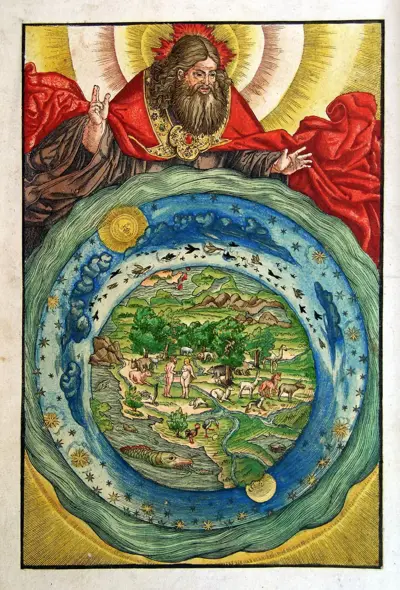
The Book of Genesis, the first book of the Hebrew Bible and the Christian Old Testament, is an account of the creation of the world, the early history of humanity, Israel's ancestors, and the origins of the Jewish people. Its Hebrew name is the same as its first word, Bereshit ("In the beginning").
