Karl Marx Quotes
There is something in human history like retribution; and it is a rule of historical retribution that its instrument be forged not by the offended, but by the offender himself. The first blow dealt to the French monarchy proceeded from the nobility, not from the peasants. The Indian revolt does not commence with the ryots, tortured, dishonoured and stripped naked by the British, but with the sepoys, clad, fed and petted, fatted and pampered by them.
Marx, Karl. "The Indian Revolt." Marx Engels Collected Works, Vol. 15, Lawrence & Wishart, 1986, p. 353.

In 1927 there was a Peasant Uprising in the Hunan Province of China. Young Mau went there and wrote a report. Corruption has plagued China for millennia. As can be seen by this quotation, Mao thought that a “people’s revolution” would end corruption and despite capital punishment for corruption under the Communist government, corruption still thrived. By the 21st century corruption was common among local Communist Party Officials despite national party and government attempts to obliterate it.


Two months earlier, Jinnah and the Muslim League had, behind the scenes, orchestrated and abetted vicious, murderous, terrorist attacks on Sikhs by Muslim tribesman brought into the Punjab for the purpose." Master Tara Singh


The veiled threat of violence and disruption was a tactic that did not work.

He was also the primary planner of the assassination. He was executed for his crime which not only killed Sedat but also a diplomat and a Christian Cleric. Iran named a street in Tehran for Islambouli in 1981 in honor of his “martyrdom.”


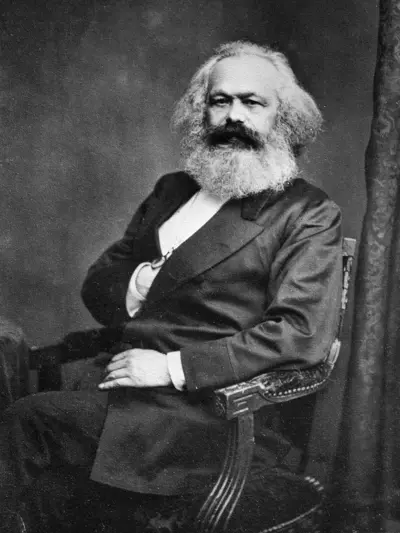
Karl Heinrich Marx was a German philosopher, economist, historian, sociologist, political theorist, journalist and socialist revolutionary. Born in Trier, Germany, Marx studied law and philosophy at university. He married Jenny von Westphalen in 1843. Due to his political publications, Marx became stateless and lived in exile with his wife and children in London for decades, where he continued to develop his thought in collaboration with German thinker Friedrich Engels and publish his writings, researching in the reading room of the British Museum. His best-known titles are the 1848 pamphlet The Communist Manifesto and the three-volume Das Kapital (1867–1883). Marx's political and philosophical thought had enormous influence on subsequent intellectual, economic and political history. His name has been used as an adjective, a noun, and a school of social theory.
