Victor Hugo Quotes
When dictatorship is a fact, revolution becomes a right.
Victor Hugo, 1802-1885, French Writer, Member of the Constituent Assembly & the National Assembly at Bordeaux, Quoted in Time, June 3, 1957
Sourced by: Eigen's Political and Historical Quotations


Honore Gabriel Victor Requiti. The French King had just opened the French National Assembly which contained deputies (delegates) from the clergy, the nobility and the people. The King had made what some deputies thought was a very constructive and responsible speech opening the assembly. Mirabeau observed that as long as there was an absolute monarch in place, even a benign one. It was the presence of a monarch itself that was evil.


Chile with help from San Martin had ejected the Spanish. O’Higgins, the Chilean leader had joined up with San Martin and served under his command. The sectional rivalry bothered men like Carrera. Instead of seeing all the South Americans fighting the Spanish as allies as O’Higgins did, Carrera and his brothers refused to join a government of unity and they and their troops were just as dictatorial and cruel as the Spanish had been. O’Higgins gave Indians and Blacks equal rights with whites which distressed the aristocratic Carrera’s. Finally the Carrera’s tried to set up their own government, and the new Chilean government disarmed their militia and executed two of the three Carrera brothers who were leading the militia troops who were little more than thieves and brigands.

He was also the primary planner of the assassination. He was executed for his crime which not only killed Sedat but also a diplomat and a Christian Cleric. Iran named a street in Tehran for Islambouli in 1981 in honor of his “martyrdom.”


In 1775 Brown University decided to forgo the usual public Commencement and celebration due to:

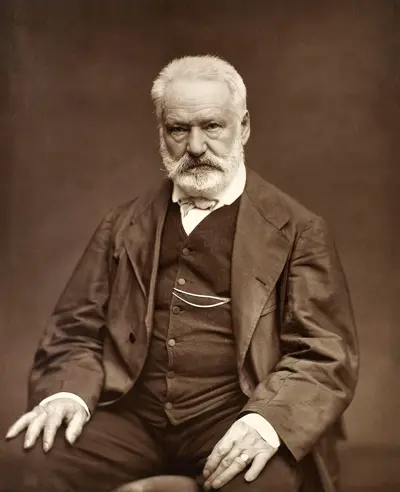
Victor-Marie Hugo was a French poet, novelist, and dramatist of the Romantic movement. During a literary career that spanned more than sixty years, he wrote abundantly in an exceptional variety of genres: lyrics, satires, epics, philosophical poems, epigrams, novels, history, critical essays, political speeches, funeral orations, diaries, letters public and private, as well as dramas in verse and prose.
