Abraham Pais Quotes
There is not a soul on Earth who can read the deluge of physics publications in its entirety. As a result, it is sad but true that physics has irretrievably fallen apart from a cohesive to a fragmented discipline. ... It was not that long ago that people were complaining about two cultures. If we only had it that good. today.
Pais, Abraham. Inward Bound: Of Matter and Forces in the Physical World. Oxford University Press, 1986.


This was in 1945 where the number of research studies published each month was large compared to the past but a tiny fraction of what it would be just 50 years later.
Bush had advised FDR to go ahead with the research and development program to try and develop an atomic bomb. He was the only Government Official who Roosevelt discussed the idea with. At the time, Bush as a government official supervised and directed many thousands of scientists, and was one of just a few scientists who monitored and advised on the Manhattan Project to develop the Bomb. Here he is one of the first people to notice, understand and articulate the dilemma of specialization in science. To the degree it was a problem in 1945, it became a geometrically greater problem 65 years later satellites were capturing more high resolution of the universe every week than all the astronomers in the world could examine in a year. Ironically, Bush called for a type of precursor to the Internet to cope with this problem which the Internet helped with. Using computers to observe and analyze the many images helped much but all of science became weighed down with this problem of specialization and the explosion of knowledge.


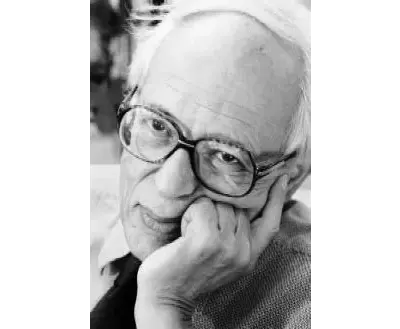
Abraham Pais was a Dutch-American physicist and science historian. Pais earned his Ph.D. from University of Utrecht just prior to a Nazi ban on Jewish participation in Dutch universities during World War II. When the Nazis began the forced relocation of Dutch Jews, he went into hiding, but was later arrested and saved only by the end of the war. He then served as an assistant to Niels Bohr in Denmark and was later a colleague of Albert Einstein at the Institute for Advanced Study in Princeton, New Jersey. Pais wrote books documenting the lives of these two great physicists and the contributions they and others made to modern physics. He was a physics professor at Rockefeller University until his retirement.
