Robert Benchley Quotes
There is a note in the front of the volume saying that no public reading may be given without first getting the author's permission. It ought to be made much more difficult to do than that.
Benchley, Robert. Love Conquers All. Henry Holt and Company, 1922, p. 110.


Note that the only reason given in the constitution for protecting intellectual property was to promote the progress of science and useful arts. Inventors, would keep secret their inventions and techniques of manufacture and use in order to protect their economic interests. No one else would be able to benefit by understanding the invention and taking it further and increasing knowledge and understanding. So the Founding Fathers told Congress to establish a system where inventors would get a guarantee of a reasonable time to profit exclusively from the invention in exchange for making the invention public. The plans, methods and drawings had to be made public and until the 20th century a model of an invention had to be supplied to the Patent Office. Anyone could get an inexpensive copy of any patent and come and study the models. Today, most people believe that the reason for a patent system is to protect the intellectual property of the inventor, but that was not a purpose or even a serious consideration. The reason however was educational and to demystify technology and produce more science and technology which it did.


Guthrie was one of the many people who used the copyright law to prevent someone else from restricting the information and allowing wide utilization of their proprietary material. This is sometimes called “copyleft.” This quotation collection is another example of copyrighted material with broad encouragement of utilization.


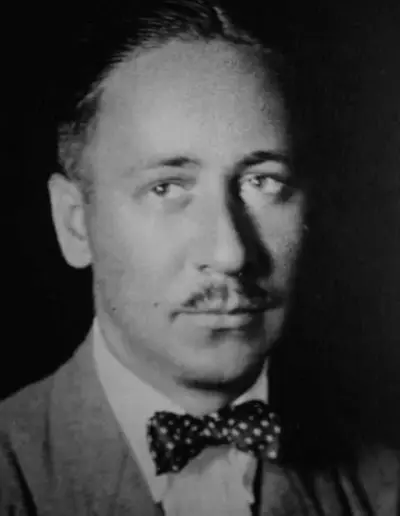
Robert Charles Benchley was an American humorist best known for his work as a newspaper columnist and film actor. From his beginnings at The Harvard Lampoon while attending Harvard University, through his many years writing essays and articles for Vanity Fair and The New Yorker and his acclaimed short films, Benchley's style of humor brought him respect and success during his life, from his peers at the Algonquin Round Table in New York City to contemporaries in the burgeoning film industry.
