John Adams Quotes
There exists, I believe, throughout the whole Christian world, a law which makes it blasphemy to deny or doubt the divine inspiration of all the books of the Old and New Testaments, from Genesis to Revelations. In most countries of Europe it is punished by fire at the stake, or the rack, or the wheel... Now, what free inquiry, when a writer must surely encounter the risk of fine or imprisonment for adducing any argument for investigating the divine authority of those books?
Adams, John. "Letter to Thomas Jefferson, 23 January 1825." The Works of John Adams, Second President of the United States, edited by Charles Francis Adams, vol. 10, Little, Brown and Company, 1856, p. 414.


In September of 2005 a Danish Newspaper published some political cartoons showing the hypocrisy of some Muslims who use Islam to justify murder of innocents and terrorism. Months later, in January of 2006 many in the Middle East protested vehemently and Muslim fatal riots broke out because the Prophet Muhammad's visage was depicted against Islamic tradition. Many Muslim nations started a boycott against Denmark. Many Muslim leaders claimed that insulting religion was an “abuse” of freedom of speech including those from nations which regularly publish material that is virulent against Christians and Jews.

Since Muslims try and convert others, one who changes religion and becomes a Muslim is exempt. The death penalty is reserved for Muslims who leave the religion.

Servetus’ book On the Motion of the Heart and Blood of Animals, was so threatening that of the 1000 copies that were printed only 3 survived the burning including ironically Calvin’s personal marked up copy.

While the Visigoths had some very advanced legal principles, this law, quoted in its entirety is typical of the nations that were part of the Catholic world. The church and its doctrines were immune from any possible criticism, explicit or implicit. This is the most formalized and sophisticated compendium of laws of the so-called “barbaric peoples” of Europe. The compilation was in many ways a documentation of the traditional laws of the Visigoths that had evolved over hundreds of years.


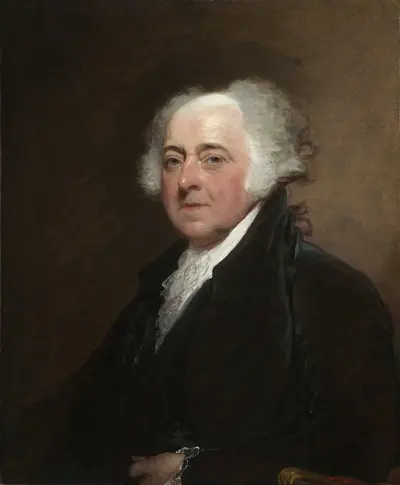
John Adams Jr. was an American statesman, attorney, diplomat, writer, and Founding Father who served as the second president of the United States from 1797 to 1801. Before his presidency, he was a leader of the American Revolution that achieved independence from Great Britain, and he served as the first vice president of the United States. Adams was a dedicated diarist and regularly corresponded with many important figures in early American history, including his wife and adviser Abigail Adams and Thomas Jefferson.
