Lawrence M. Krauss Quotes
Keeping religion immune from criticism is both unwarranted and dangerous.
Krauss, Lawrence M. "Faith and Foolishness: When Religious Beliefs Become Dangerous." Scientific American, vol. 303, no. 2, Aug. 2010, p. 36.

In 2005 Rose published a number of cartoons some of which depicted the Muslim Prophet, Muhammad which offended many fundamentalist Muslims who had a tradition who had a tradition of never depicting the visage of the Prophet. A delegation of clerics demanded an apology from Rose and the country of Denmark, claiming that they and Islam, like other religions, were entitled to respect.

This was the third of her books that were banned in Bangladesh.

Rushdie was commenting on the Danish Cartoons that had been published the year before depicting the Islamic Prophet Muhammad to the great distress of some fundamentalist Muslims some of whom orchestrated riots in many countries involving much property destruction and some loss of life. See {590918} as an example of the concern.


In September of 2005 a Danish Newspaper published some political cartoons showing the hypocrisy of some Muslims who use Islam to justify murder of innocents and terrorism. Months later, in January of 2006 many in the Middle East protested vehemently and Muslim riots broke out because the Prophet Muhammad's visage was depicted against Islamic tradition. Many Muslim nations started a boycott against Denmark. Many Muslim leaders claimed that insulting religion was an “abuse” of freedom of speech including those from nations which regularly publish material that is virulent against Christians and Jews.

The Vatican Congregation of the Index had banned Greene’s Book, The Power and the Glory. See {598544}.


Anne Hutchinson was tried by the Puritan religious and civil court for heresy. She started with Bible Study classes in her home and drew a substantial following. The clergy at the time were threatened and outraged. It was one thing for a woman to teach Bible Study to other women, but to also have men with the women was too much. The decision of the court was that she was banished from the colony. See {584753}.

In 2005 an Egyptian writer, Usama Anwar Ukasha, criticized one of the Prophet’s companion’s role for causing dissention and divisiveness in Islamic history. Some called for his legal punishment for slandering a holy figure (see {588714}) and a law case was brought to force him to divorce his wife—so that she would not be “contaminated by his heretical thoughts. Al-Bana argued for freedom of thought and speech on such subjects. His view was particularly important since he was the brother of Hassan Al-Bana, the founder of the Muslim Brotherhood, a powerful fundamentalist organization. Note that Al-Bana’s call for intellectual freedom does not go so far as to say that it should be legal to criticize The Prophet Muhammad and it illustrates how far even modern Islam has to go to meet reasonable standards of freedom of thought and speech.


Curtis had at first arrested Samuel B. McPheeters a St. Louis preacher for pro-Southern sermons. Lincoln had countermanded the arrest order. Curtis released the pastor, but prohibited him from preaching in his own church. It took Lincoln many months to find this out and Lincoln then instructed this second instruction to Curtis not to continue the ban.


Ironically, without the word “wicked” most people would regard the first sentence as a good description of elements of a modern democracy. It illustrates that for the Islamic fundamentalist democracy substitutes the rule of man for the rule of God, freedom of speech allows heresy and blasphemy to to uttered and communicated, and religion which is supposed to inform and direct politics. So what is good for the lover of democracy is the very thing that is bad for Islam. This is not a uniquely Islamic viewpoint. It has been and is held by fundamentalist Christians and Jews as well who would return to Biblical law punishing blasphemy and heresy with death and have religion drive all politics.
The Prophet Muhammad when he was the spiritual and civil leader never called for the death of anyone who insulted him. This is strictly a mania of extremist followers of Islam. However, it should be kept in mind that the Roman Catholic Church in its history murdered people for insulting the Pope or Jesus. It all stems from the Old Testament call for the execution of heretics and blasphemers.
Other vibrant democracies also have such restrictions on freedom of speech such as Germany and Israel.

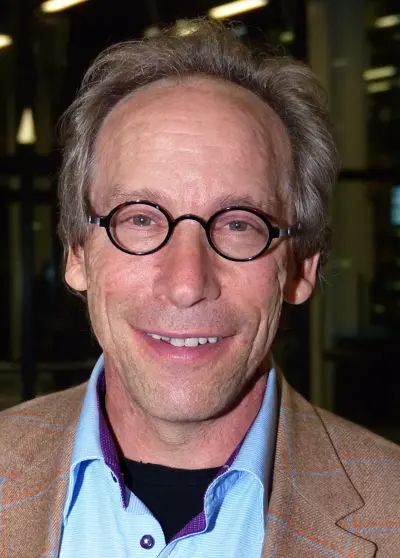
Lawrence Maxwell Krauss is an American-Canadian theoretical physicist and cosmologist who previously taught at Arizona State University, Yale University, and Case Western Reserve University. He founded ASU's Origins Project, now called ASU Interplanetary Initiative, to investigate fundamental questions about the universe and served as the project's director.
