Recep Tayyip Erdogan Quotes
There exists an unmistakable demand in the Middle East and in the wider Muslim world for democratization.
Tayyip Recep Erdogan, Prime Minister of Turkey (Welfare Party), Mayor of Istanbul, Turkey (Welfare Party), 2003, Quoted in the British Independent
Sourced by: Eigen's Political and Historical Quotations


10 centuries ago was a time when the Arabs were far more advanced and modern than other cultures including the Christian West that was in the Dark Ages. However, in the 12th century there was a “closing”—a narrowing of allowable Islamic thinking, and since then, Islamic people have had great difficulty with change or modernity. Not all Muslim nations are equally rigid but the Arabs are at the extreme among Islamic counties.


This statement is referring to the custom of women covering their eyes whenever a man who they did not know passed them. Turks did not ever use Burkas the way some other Muslim countries do, but they wore headscarves and covered their eyes when a strange man appeared. This was a shocking statement in a sexist Islamic culture. Although the process of modernization and reform in Turkey was relatively bloodless, Ataturk was prepared to and did use force to defend it. This and many others made the role of women not only uniquely equal in the Islamic world, but women were suddenly elevated to the level of most Western nations and in voting rights were ahead of most. He used his own family to set an example. See {584503}.


This concept was utilized by the U. S. State Department in opposition to the 1992 dissolution of the Peruvian Congress by the President who claimed he was doing it for democratic reasons. See Al Smith for a later expression of this notion.

This quotation of a very popular Muslim cleric illustrates the wide range of political views of Islamic leaders and authorities. Whereas most shun democracy as placing public opinion over the word of God, there are many like al-Qaradawi who have a modernist interpretation of Islam.


Ironically, without the word “wicked” most people would regard the first sentence as a good description of elements of a modern democracy. It illustrates that for the Islamic fundamentalist democracy substitutes the rule of man for the rule of God, freedom of speech allows heresy and blasphemy to to uttered and communicated, and religion which is supposed to inform and direct politics. So what is good for the lover of democracy is the very thing that is bad for Islam. This is not a uniquely Islamic viewpoint. It has been and is held by fundamentalist Christians and Jews as well who would return to Biblical law punishing blasphemy and heresy with death and have religion drive all politics.

This statement was made 20 years before the Arab Spring of 2011.


This illustrates the major problem of establishing democracy in an Islamic nation. If the mainstream of Islamic people accept democracy as in Turkey, there can be a vibrant democracy. But if the mainstream sees all other religions as heresy and insists on a literal interpretation of the Koran, then democracy is impossible as in Saudi Arabia.

He warned that if there were quick elections, the Islamists being the only organized civil and political organizations were bound to win and then it would be very hard to create civic democratic institutions which would not only be competition for the Islamists but would likely be secular—their worst fear. He generally turned out to be right as Lewis was the Western World’s greatest Islamic Historian,
His views are a mix of modernism and fundamentalism. He favors democracy and elections but also favored the Taliban destroying the great ancient Buddha statues when he was called an idol worshipper for urging the preservation of art.

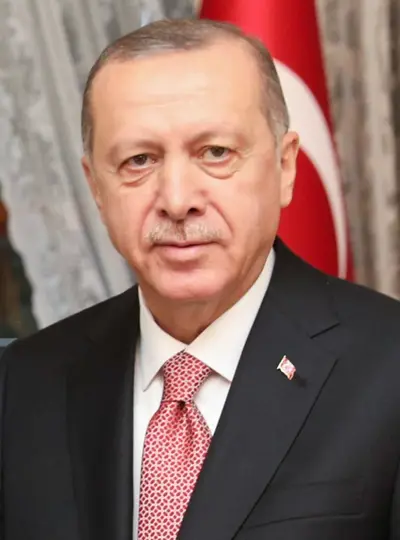
Recep Tayyip Erdoğan is a Turkish politician serving as the current President of Turkey. He previously served as Prime Minister of Turkey from 2003 to 2014 and as Mayor of Istanbul from 1994 to 1998. He founded the Justice and Development Party (AKP) in 2001, leading it to election victories in 2002, 2007, and 2011 before being required to stand down upon his election as President in 2014. He later returned to the AKP leadership in 2017 following the constitutional referendum that year. Coming from an Islamist political background and self-describing as a conservative democrat, he has promoted socially conservative and populist policies during his administration.
