Martin Indyk Quotes
The United State can no longer allow its Arab allies to ward off democratic reform.
Martin Indyk, Assistant Secretary of State (Democrat), U. S. Ambassador to Israel, Special Assistant to the President [Clinton], “Back to the Bazaar,” Foreign Affairs, January / February 2002
Sourced by: Eigen's Political and Historical Quotations

The Senator was in Egypt trying to persuade the Egyptian military which had engineered the regime change and jailed the previous leaders to be more democratic. Typically foreign leaders would respond to these democratic entreaties by pointing out the flaws in the American implementation of democracy ranging from slavery to the lack of womens’ suffrage until the 1920s and the economic meltdown of 2008 where the government helped the bankers and reduced services to the poor victims of the Great Recession. Graham asked focus on the message and not on us as an imperfect messenger.


There was a movement amongst some Arab counties towards democracy in 2005. There was Western diplomatic pressure on Egypt and Saudi Arabia to hold free elections for the first time.


Even the CIA and the other U. S. Intelligence missed predicting the Arab Spring, but so did the intelligence services of all our allies, Russia, China and even Israel which usually has the best intelligence in the Middle East. One of the reasons he argues is that media and technology played such an important role in facilitating the Arab Spring and the intelligence agencies do not really understand the new media world. The people who do some argue are too young to ever be in enough key positions in these agencies to have much influence.


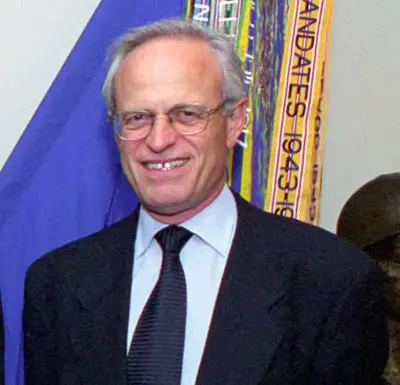
Martin Sean Indyk is a diplomat and foreign relations analyst with expertise in the Middle East. He was a distinguished fellow in International Diplomacy and later executive vice president at the Brookings Institution in Washington, D.C from 2001-2018. He took leave from the Brookings Institution to serve as the U.S. Special Envoy for Israeli–Palestinian Negotiations from 2013 to 2014. He is currently a distinguished fellow at the Council on Foreign Relations.
