Rached Ghannouchi Quotes
There are common denominators that unite all members of al-Nahda: There is no one in al-Nahda who doubts about Islam There is no one in al-Nahda that believes in extremist views of Islam.
Ghannouchi, Rached. "A Conversation with Rached Ghannouchi." Council on Foreign Relations, Council on Foreign Relations, 30 Nov. 2011.


The party to which he was referring was the Ennahda Party of which he was a founder. Note that party's acknowledgement that Islamic extremists had hijacked the terms "Islamic" and "Islamism", thus requiring them to change vocabulary to distinguish themselves and their more democratic values.


His Mosque was bombed and he, along with over 100 of his followers, were assassinated for such moderate views in September 2003.

Munir was a strong advocate for civilian control over the military and exposed many military atrocities and disappearances. He was poisoned on a Garuda Airlines flight to Holland where he was exposing more of the human rights violations of the Indonesian Military.

The Caliph in the past was the religious and secular leader of all Muslims. Many of the fundamentalist terrorists have as their objective, the reestablishment of the Caliphate which will unite all Islamic countries under one leader who is both the secular and religious supreme authority—a religious and a civil dictatorship. Most Muslims, like most people of all religions, are not terrorists and believe that much of terrorist activity violates many basic tenets of Islam. However, in order to function, the terrorist must have the tacit support of sufficient numbers of people so that they can function without being exposed. That is an important objective for Al-Qaeda: to enlist sufficient numbers of ordinary people who although they will not commit the terrorist acts, will support the objectives of the terrorists and provide money, shelter, and other services.

Here Khomeini takes the classic Islamic view of the Koran that leaders should be obeyed unless they do not follow Islam. To the leaders of Islamic nations, this means that even if the state is not a theocracy, the Muslim clergy has the final say as to whether a ruler may justly remain in power since they are the ones who determine if a ruler is properly following Islam.

Over a century ago, modern Islamists were critical of the Wahhabi sect for their extremism. Unfortunately, the Saudi Arabian royal family whose absolute control of the kingdom could be threatened by an extremist religious movement, cut a deal with the Wahhabi that not only gave them control over all religious and legal interpretations of Sharia in the kingdom, but also gave them large amounts of money with which the Wahhabi expanded and exported their extremist brand of Islam to many other counties—including the United States. A large part of the Islamic terrorism of the end of the 20th century into the 21st was caused by fanatics who had been exposed to Wahhabi schools (madrassas), mosques or materials which are virulently anti-Christian and ant-Semitic. Muslim intellectuals like Muhammad Abduh had warned about extremism in general and Wahhabi extremism in particular.

Most Muslims when asked what they are will say “A Muslim” whereas most members of every other religion will give his/her nationality first and his/her occupation or profession second. Very few answer with their religion.
It is precisely for these reasons that large numbers of Muslims consider Ghannouchi and other reformers to be threats to Islam and in need of suppression in order to protect their religion.
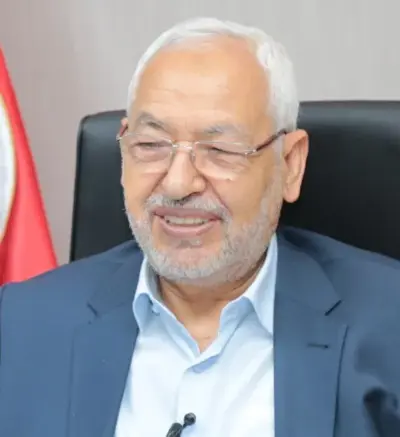
Rached Ghannouchi, also spelled Rachid al-Ghannouchi or Rached el-Ghannouchi, is a Tunisian politician and thinker, co-founder of the Ennahdha Party and serving as its "intellectual leader". He was born Rashad Khriji (راشد الخريجي).
