Frank B. Kellogg Quotes
There are but few naval powers, but there are many land powers.
Kellogg, Frank B. "The Renunciation of War." Nobel Lecture, 11 Dec. 1930, Norwegian Nobel Institute, Oslo. Nobel Lectures, Peace 1926-1950, edited by Frederick W. Haberman, Elsevier Publishing Company, 1972.


This quotation illustrates several historical differences of the past with today. To be a world superpower, one had to have a dominant navy. Yet that navy was, in Churchill’s concept, a defensive system. It could protect the nation from invasion, and its merchant ships on the seas, but a navy provided no threat to invade towns and villages in Europe or elsewhere. Germany and France in contrast, with their large armies could invade other nations and menace Europe and Asia. It also illustrates why the navy and the army were considered completely separate departments of government in that they had different functions. The early American government had a Navy Department and Secretary but no Secretary of the Army or standing army.


Germany had a very small and insignificant navy. It was Tirpitz who persuaded the nation to develop sea power.

He was one of the last generation of military officers who did not have the education, training, and political sophistication to avoid picking one of the several factors for going to war, and making it seem that that was the most important or only one. Oil is always a factor in the Middle East, but there were other major causes for our going to war.


This was a warning to Saudi Arabia that the United States might seize the oil fields. At the time we were not getting enough oil for domestic needs and the military in Europe and in Vietnam. The King arranged to secretly supply oil to the United States while maintaining to the other Arab countries that it was maintaining the boycott of the West.


At the time France and Germany controlled different parts of the Ruhr Valley. Each believed that they should control it all and the other had no right to control any of it. This never did get settled and was one of the justifications Germany gave in WWII for invading the area. Haskins was one of only three assistants who were part of Woodrow Wilson’s team that negotiated the Treaty of Versailles ending WWI.


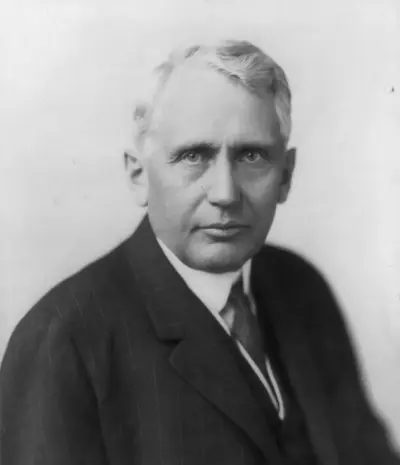
Frank Billings Kellogg was an American lawyer, politician, and statesman who served in the U.S. Senate and as U.S. Secretary of State. He co-authored the Kellogg–Briand Pact, for which he was awarded the Nobel Peace Prize in 1929.
