Murray Bookchin Quotes
The workers and peasants had created their own institutions to administer the cities in republican Spain, formed their own armed workers' squads to patrol the streets, and established a remarkable revolutionary militia force to fight the Francista [fascists of General Franco] forces -- a voluntaristic militia in which men and women elected their own commanders and in which military rank conferred no social, material, or symbolic distinctions.
Murray Bookchin, 1921-2006, Political Scientist, Historian & Philosopher, Description of Republican Spain of the 1930’s, To Remember Spain
Sourced by: Eigen's Political and Historical Quotations


Babeuf led a faction of French revolutionists who thought that the revolution had become to hierarchical and had substituted a dictatorship of certain citizens for the dictatorship of the King. He was arrested and executed by the hierarchy he was trying to replace in what has become known as the “conspiracy of the equals.”

Durruti’s and other Republican columns were advancing on Saragossa on the Aragon front to free it from the Fascists. Durruti’s army was made up of idealist libertarians and anarchists who also didn’t much like straight communists because they would restrict individual freedom. The regular communist army was more conservative and wanted to coordinate and attack and wait for planning and more coordination between the columns. The libertarians pushed ahead with the others following and they took Saragossa

Vladimir Lenin. Most did not and the Communist government was brutal and murderous in forcing them into the Communist culture, outlook, and behavior. See {640096} for a description of some of the effort.


Comintern was upset by the American Socialist Party because the party had rejected the 21 Conditions for Affiliation and withdrew their intent to join the Third International. To Comintern, the Socialist Party was a party of “bourgeois socialism.”

Franklin Delano Roosevelt used the phrase in his Third Inaugural Address {32529}. But the earliest expression that we have found is the Mexican leader Emiliano Zapata {46999} Franklin Delano Roosevelt later used the phrase in his Third Inaugural Address {32529}. But the earliest expression that we have found is the Mexican leader Emiliano Zapata {46999}. This was one of the great quotations to come out of the Spanish Revolution. It inspired freedom loving people the world over, then and through this day.


This principle represented one of the rifts between Gorter and Lenin. Lenin and most Russian Communists insisted that labor unions be subservient to the Communist Party and the State. Gorter, and a few other socialists argued for the independence of the unions from the control of all but its membership. Unions subservient to political parties have been disastrous in some of the Communist countries but also in the Fascist nations where the right wing took over control of the unions. Even in America, the Communist Party attempted to take over the unions in the first half of the 20th century and actually succeeded in a few cases. Those opposing unions of any kind saw little difference between the unions and the Communist Party. Some American unions came under the control of the communists and others under the control of the companies, but most have been independent.


So often in America, citizens and government officials have made alliances or joined organizations under the theory that “the enemy of my enemy must be my friend.” It has almost always been a mistake ranging from joining the Communist Party in the 1930s to supporting the dictators or the Middle East, Asia, and South America. In the 1930s Fascism was growing and already on the march and neither America nor England—the leading democracies were not doing anything to combat the threat. America was emerging from the Great Depression, had a string Isolationist movement, and a small but influential group of Fascists and Hitler enthusiasts. Also, no one outside of Russia knew about the Stalin atrocities.

This is a very important historical, political quotation. The conservatives have since the Russian Revolution conflated socialism and communism. However, here in 1932 the leader of the American Socialist Party had already described the Communist Revolution in Russia as a failure of founding an acceptable modern state. Nonetheless, even into the 21st century many conservatives describe Thomas as a Communist. See {626692} for his distinction between Communism and Socialism. The difficulty of modern nation building was explained by Thomas and others but was really not accepted until the many attempts of the early 21st century, some supported by America like Iraq and Afghanistan and the Balkans and others like the “Arab Spring.” Then his early wisdom on this point became more appreciated.

After the 1917 Russian Revolution many of the Western Countries sent troops to Russia where they aided the Whites against the Reds. When the Red Bolsheviks prevailed, there were many attempts to diplomatically and economically undermine the Communist government. This caused a unity among different Russian factions. Sforza urged leaving them alone and letting the Bolsheviks fail by their own ideology. Most Western nations and the United States did not agree with him.

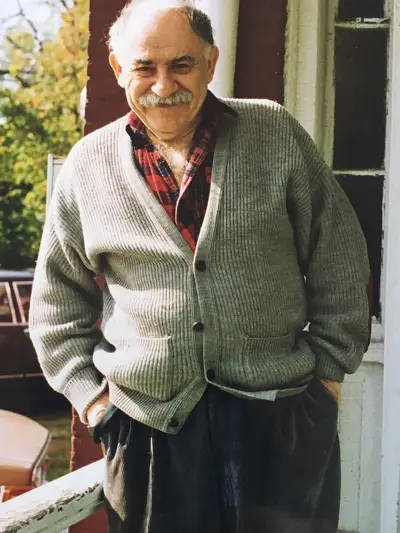
Murray Bookchin was an American anarchist, political philosopher, trade-union organizer, and educator. A pioneer in the environmental movement, Bookchin formulated and developed the theory of social ecology and urban planning, within anarchist, libertarian socialist, and ecological thought. He was the author of two dozen books covering topics in politics, philosophy, history, urban affairs, and social ecology. Among the most important were Our Synthetic Environment (1962), Post-Scarcity Anarchism (1971), The Ecology of Freedom (1982) and Urbanization Without Cities (1987). In the late 1990s, he became disenchanted with what he saw as an increasingly apolitical "lifestylism" of the contemporary anarchist movement, stopped referring to himself as an anarchist, and founded his own libertarian socialist ideology called communalism, which seeks to reconcile Marxist and anarchist thought.
