Herman Gorter Quotes
Every form of organization that does not allow the masses to rule and to guide for themselves, must need be counter-revolutionary and harmful
This principle represented one of the rifts between Gorter and Lenin. Lenin and most Russian Communists insisted that labor unions be subservient to the Communist Party and the State. Gorter, and a few other socialists argued for the independence of the unions from the control of all but its membership. Unions subservient to political parties have been disastrous in some of the Communist countries but also in the Fascist nations where the right wing took over control of the unions. Even in America, the Communist Party attempted to take over the unions in the first half of the 20th century and actually succeeded in a few cases. Those opposing unions of any kind saw little difference between the unions and the Communist Party. Some American unions came under the control of the communists and others under the control of the companies, but most have been independent.
Herman Gorter, 1864-1927, Dutch Philosopher & Reformer, Open Letter to Comrade Lenin, 1920
Sourced by: Eigen's Political and Historical Quotations

The emphasis was Gorter’s. He was very critical of the top-down, authoritarian type of communism that had evolved in the aftermath of the Russian Revolution. The letter was widely published. There were few left wing intellectuals who would take Lenin on at the time but Gorter was one.


After the 1917 Russian Revolution many of the Western Countries sent troops to Russia where they aided the Whites against the Reds. When the Red Bolsheviks prevailed, there were many attempts to diplomatically and economically undermine the Communist government. This caused a unity among different Russian factions. Sforza urged leaving them alone and letting the Bolsheviks fail by their own ideology. Most Western nations and the United States did not agree with him.


Eldest son of Robert Walpole

Many foreign armies, including troops of the United States, had surrounded Russia. Most had no specific instructions or purpose but they all wanted to protect their interests from the chaotic Russian situation as well as from each other who might use the Russian weakness to establish their foothold.


Comintern was generally supportive of Black enfranchisement; but they were unrealistic, for they viewed Blacks as an oppressed “nation” within the United States. Blacks, however, weren’t looking for a distinct nationhood, but just to be fully accepted into the already existing nation.
Comintern was upset by the American Socialist Party because the party had rejected the 21 Conditions for Affiliation and withdrew their intent to join the Third International. To Comintern, the Socialist Party was a party of “bourgeois socialism.”


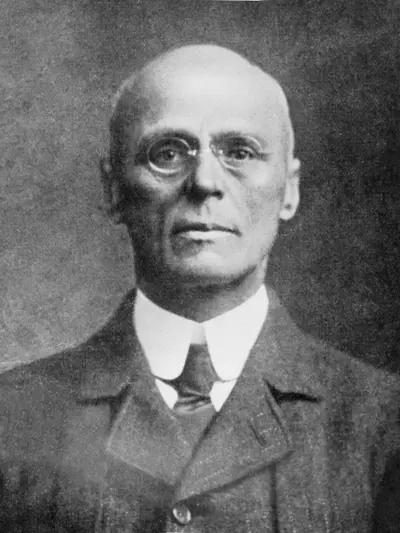
Herman Gorter was a Dutch poet and socialist. He was a leading member of the Tachtigers, a highly influential group of Dutch writers who worked together in Amsterdam in the 1880s, centered on De Nieuwe Gids (The New Guide).
