Horace Walpole Quotes
Our supreme governors, the mob.
Eldest son of Robert Walpole
Horace Walpole, 1717-1797, 4th Earl of Oxford, English Economist, Writer & Politician, Letter to Horace Mann
Sourced by: Eigen's Political and Historical Quotations


She was a member of the opposition party and was criticizing the Conservative Government.

This quotation is almost always given as if it were Alcuin who advocated listening to the people, when actually his view was just the opposite. See William Tecumseh Sherman for a more modern expression of the same view. Also, Walter Reynolds {32317} for an opposite view, but using a similar phrase. Note that since he was referring to what "the people" say, the quote must have been in common usage in the 9th century. For the earliest known use of the statement in Western civilization, see Hesiod {603399}.

1st Baron Lytton of Knebworth

See Franklin Delano Roosevelt and Grover Cleveland for a similar view.


This is a very important quotation. It explains in great part, why there have been so few internal revolutions in Muslim countries. Al-Ghazi’s interpretation of Islamic Law and Theology concluded that even if the ruler is incompetent, corrupt, or destructive he should be supported and obeyed by all good Muslim citizens. The reason was that anarchy and/or chaos was an evil much worse for the Islamic community. There was one exception in the case of a ruler who was blasphemous or did not follow Islam. Then it was the duty of good Muslims. Since then, the ruler of an Islamic state, first seeks to ingratiated himself with the clergy. In Saudi Arabia, for example, the Royal Family gives enormous sums to all the clerics. They then urge dissidents and would be revolutionaries to accept the Royal Family with its flaws and shortcomings and accept their lack of freedom and human rights. And they tell all that the King and his family are all religious and support Islam. Therefore any revolt would be a tantamount to a sin. The Christian world had a different technique for inhibiting Revolution. Christian rulers claimed the Devine Right of Kings—that God had selected and ordained the king to lead. Regime change was contrary to the word of God. In a sense, the Islamic approach is more intellectually honest and seems to have worked much better than the Christians who have had so many revolutions. Better that is from the rulers point of view. From a democratic, Jeffersonian point of view revolting against an evil ruler was almost a moral obligation, and Al-Ghazali’s principle is all wrong and is keeping the Muslim countries from reaching democracy.
During the English Civil War, he wrote official news and propaganda for both sides of the conflict. His writings were well known to our founding fathers and John Adams wrote a treatise attacking Nedham’s writings.


At the time, Wallace and many other Southern politicians were leading efforts to undermine the new Civil Rights Laws ending legal segregation. Most Southern police forces had been major vehicles for enforcing segregation and brutally suppressing any protests or demonstrations against segregation. Law enforcement officers had been active in lynchings and murders.
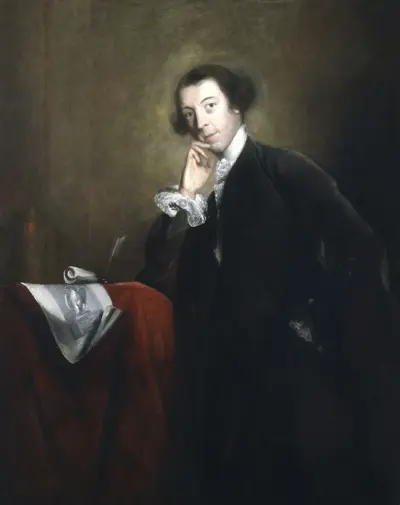
Horatio Walpole, 4th Earl of Orford, also known as Horace Walpole, was an English writer, art historian, man of letters, antiquarian and Whig politician.
