Herman Gorter Quotes
In Western Europe we still have, in many countries, leaders of the type of the Second International; here we are still seeking the right leaders, those that do not try to dominate the masses, that do not betray them; and as long as we do not find these leaders, we want to do all things from below
The emphasis was Gorter’s. He was very critical of the top-down, authoritarian type of communism that had evolved in the aftermath of the Russian Revolution. The letter was widely published. There were few left wing intellectuals who would take Lenin on at the time but Gorter was one.
Herman Gorter, 1864-1927, Dutch Philosopher & Reformer, Open Letter to Comrade Lenin, 1920
Sourced by: Eigen's Political and Historical Quotations

This principle represented one of the rifts between Gorter and Lenin. Lenin and most Russian Communists insisted that labor unions be subservient to the Communist Party and the State. Gorter, and a few other socialists argued for the independence of the unions from the control of all but its membership. Unions subservient to political parties have been disastrous in some of the Communist countries but also in the Fascist nations where the right wing took over control of the unions. Even in America, the Communist Party attempted to take over the unions in the first half of the 20th century and actually succeeded in a few cases. Those opposing unions of any kind saw little difference between the unions and the Communist Party. Some American unions came under the control of the communists and others under the control of the companies, but most have been independent.

Bureaucracy has always been a problem for communist and capitalist alike.


Vladimir Lenin. Most did not and the Communist government was brutal and murderous in forcing them into the Communist culture, outlook, and behavior. See {640096} for a description of some of the effort.


He was a major critic of Socialism but he did acknowledge that the Socialist Movement had made major contributions.


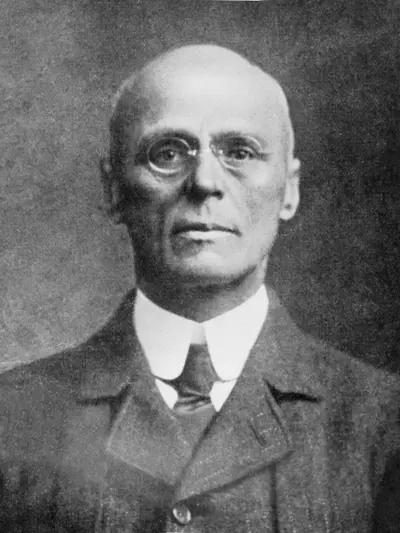
Herman Gorter was a Dutch poet and socialist. He was a leading member of the Tachtigers, a highly influential group of Dutch writers who worked together in Amsterdam in the 1880s, centered on De Nieuwe Gids (The New Guide).
