William Smyth Quotes
The wisdom, the duty of mild government I conceive to be the great but disregarded lesson of all history.
One of his theses was that harsh and cruel government was responsible for a large proportion of troubles in the world.
William Smyth, 1765–1849, English Historian, Lectures on Modern History, published 1854
Sourced by: Eigen's Political and Historical Quotations


See {642231} for has additional views on German leadership. Many serious Germans agreed, but the culture, concept of patriotism, and the laws did not encourage open discussion of negative things about the nation so the problem remained.


This quotation is one of the best statements reflecting the logic and thinking of a large part of American expansionists and imperialists. Mark Twain and others formed an Anti-Imperialistic League to combat this viewpoint and ideology and both political parties had members on each side of this issue. A little over a century later, we ended up with similar dilemmas regarding nation building in Iraq and Afghanistan after our invasions removed their terrible government. One really notable factor in this quotation is that expansionists like McKinley believed sincerely that imperialism was our DUTY which we could not fairly shirk. That is perhaps the biggest difference between America then and 100 years later.
He and his Prime Minister, John Majors, had become so unpopular, that they were forced to resign by their own Conservative Party and never had to be voted out of office.


Many feel that this explains why he never ran for the Presidency even though he was the odds on favorite to win the Democratic Party Primary and the General Election.


This was the lesson we learned in Iraq and Afghanistan. Unfortunately, American leadership at the time knew little of this quotation.

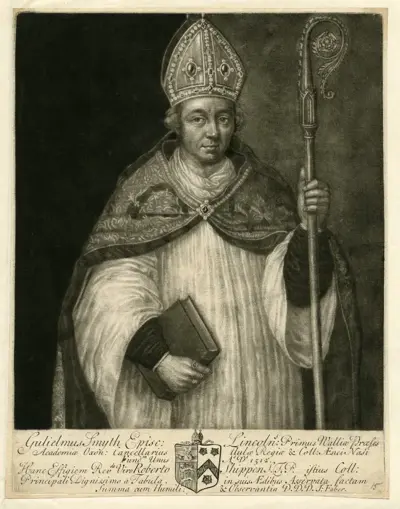
William Smyth (or Smith) was Bishop of Coventry and Lichfield from 1493 to 1496 and then Bishop of Lincoln until his death. He held political offices, the most important being Lord President of the Council of Wales and the Marches. He became very wealthy and was a benefactor of a number of institutions. He was a co-founder of Brasenose College, Oxford and endowed a grammar school in the village of his birth in Lancashire.
