Genghis Khan Quotes
Conquering the world on horseback is easy; it is dismounting and governing that is hard.
This was the lesson we learned in Iraq and Afghanistan. Unfortunately, American leadership at the time knew little of this quotation.
Genghis Khan, c.1162 - 1227, Mongolian King, Ruler, and Military Leader, Quoted in Thomas Meagher and Buck Brannaman, The Gigantic Book of Horse Wisdom (2007)
Sourced by: Eigen's Political and Historical Quotations


William the Conqueror. The King had come ashore and fell forward in the sand on his face and hands. Showing a sense of humor, he hade this statement. Shortly thereafter he took England militarily at Hastings and seized it politically.

Explaining why the President didn't have more press conferences:


They were each children of kings who were held as hostages by Attila. Living at his court, they learned much of the Huns under Attila. The couple fell in love and escaped to be rare eyewitnesses to Attila and his kingdom.

He didn’t quite conquer the whole world, but he did control most of it. One substantial difference between him and others, is that the Mongols were not interested in managing an Empire, All they wanted was an annual payment of tribute, and if that were forthcoming, the left the conquered cities and kingdoms to their own management and governance.

The “foreign tribes” were the English and other European traders who were bringing opium to China. Lin had assembled a fleet of 80 ships at the mouth of the Pearl River to persuade the European powers that they would fight if the foreign ships would not cease trading in opium. The British in particular were not intimidated, and they militarily forced the Chinese to accept their “right” to sell opium. The Emperor sent Lin to the “boondocks”—see {621320} for misjudging and provoking British military action, but Lin is remembered for his sound moral and public health perspective. A bronze statue of Lin Zexu was erected in his honor in Chatham Square (Kimlau Square) of New York City's Chinatown and many other places in the world.


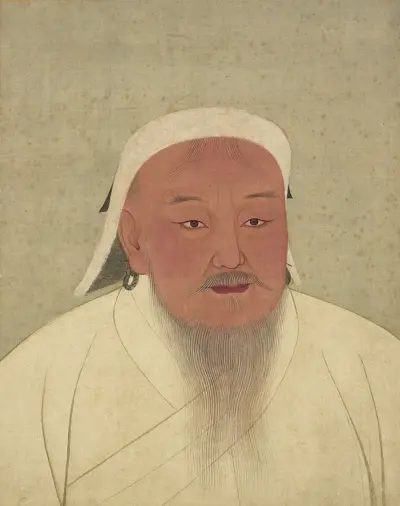
Genghis Khan, was the founder and first Great Khan (Emperor) of the Mongol Empire, which became the largest contiguous empire in history after his death. He came to power by uniting many of the nomadic tribes of Northeast Asia. After founding the Empire and being proclaimed Genghis Khan (an honorary title possibly derived from the Turkic "tengiz" — sea, meaning "the oceanic, universal ruler"), he launched the Mongol invasions that conquered most of Eurasia, reaching as far west as Poland in Europe and the Levant in the Middle East. Campaigns initiated in his lifetime include those against the Qara Khitai, Khwarezmia, and the Western Xia and Jin dynasties, and raids into Medieval Georgia, the Kievan Rus', and Volga Bulgaria. These campaigns were often accompanied by large-scale massacres of the civilian populations, especially in the Khwarazmian and Western Xia-controlled lands. Because of this brutality, which left millions dead, he is considered by many to have been a brutal ruler. By the end of his life, the Mongol Empire occupied a substantial portion of Central Asia and China. Due to his exceptional military successes, Genghis Khan is often considered to be one of the greatest conquerors of all time.
