Tecumseh Quotes
The way, and the only way, to stop this evil is for all the red men to unite in claiming a common and equal right in the land, as it was at first, and should be yet; for it was never divided, but belongs to all for the use of each.
Drake, Benjamin. Life of Tecumseh, and of His Brother the Prophet. E. Morgan & Co., 1841, p. 164.

The whites had constantly encroached on the Cherokee land which was too large for any reasonable patrolling by the Indians themselves. The Federal government persuaded the Cherokee to sign a treaty by which the Indians would give up their title to the larger part of their land. The most important quid pro quo was that the Federal Government would protect the remainder of the Cherokee land from incursion by whites or even other Indians. However, whites who coveted the land started to encroach and build farms and ranches. The Federal government was reluctant to use American soldiers against American citizens and was looking for a way out. However, the Cherokee chiefs were reminding them of their obligation. The state governments were less concerned about Federal treaties, and Georgia passed a law that said that all the Cherokee land must be governed by State Law contrary to the Treaty which gave the Cherokee total sovereignty. But the Feds were not anxious to have a showdown with the states on this issue. Whites, with the connivance of the state governments and the support of some Federal Officials offered to amend the treaty with the Cherokee. The whites would pay the Indians fair market value for their land in the East. The Federal Government would provide equal amount of land in the Indian Territory of Oklahoma, then a territory. The Feds would assist with the relocation and provide troops to protect the Cherokee from thieves and raiders—whites and Indians, and would guarantee that the Cherokee would be completely sovereign in the new land. The chief’s did not want to renegotiate the old treaty—they just wanted it enforced. The Supreme Court ruled in their favor, but President Jackson, ignored the ruling and forced the Cherokee onto the Trail of Tears for Oklahoma and the whites took over the valuable Cherokee land.


Commenting on the status of the Cherokee Indians.


This quotation is interesting in that the Madison Administration was being very careful to not alienate the Indians in Federal land purchases. Although there are many who believe the whites never should have enticed Indians to sell land at all, there were many cases where the land sales were fraudulent and gross—The Cherokee Indians in Georgia. At this time, the Federal government would negotiate an amount for some land and pay the Indian tribe the agreed upon sum. Then another tribe might claim that the land was really theirs, they had also been hunting or living there. In some cases there were Indian wars and one tribe had banished another. Madison’s policy which he reported in this speech was to negotiate with BOTH tribes separately and pay them each the agreed upon amount—he tells the public that it is worth paying double to avoid bad feelings among the Indians. Jefferson and Madison in particular had relatively liberal Indian policies. It was President Jackson who had the worst Indian policy and produced a large proportion of immoral actions, atrocities and subsequent bad feeling.


This was the basic document issued after the Russian Revolution establishing the basic legal and economic structure of the new Soviet State.


The line, like many in good poetry, has several levels of meaning. The most obvious is that we had explored and conquered the land, before we became a nation.


This is an important quotations for two reasons. First, one of the white Europan myths in the colonial era was that the Native America had not concept of land ownership and title. This quotation clearly refutes that/ Second, this shows that some Europeans coming to the new world opposed the view that the white Christians and a moral right to the Native American “heathen” land. A few like Williams did not.

Jackson refused to obey this decision, He was the only American President who disobeyed a Supreme Court Decision. In doing this, he killed tens of thousands of Indians, allowed the Southern Whites to steal most of the Cherokee land. His Indian Removal, contrary to this Supreme Court decision, was the worst case of ethnic cleansing in the history of the United States.


President-elect Kennedy had asked the poet to write and present a poem for the inaugural.

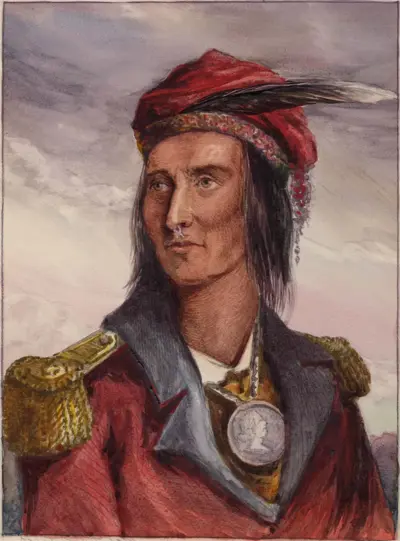
Tecumseh was a Shawnee chief and warrior who promoted resistance to the expansion of the United States onto Native American lands. A persuasive orator, Tecumseh traveled widely, forming a Native American confederacy and promoting inter-tribal unity. Although his efforts to unite Native Americans ended with his death in the War of 1812, he became an iconic folk hero in American, Indigenous, and Canadian popular history.
