P. J. O'Rourke Quotes
The Vietnam War was not clearly a wrong war, but it was clear that it was stupid.
P. J. O'Rourke, Humorist & Political Commentator, Interview, WAMU Radio, The Kojo Namde Show, March 18, 2014
Sourced by: Eigen's Political and Historical Quotations


Podharetz was citing the Vietnam war. The two American occasions where the plausibility seemed to fade were the Vietnam War and The Irag war. Both Presidents Lyndon Baines Johnson and George W. Bush as Bismarck predicted, had much political trouble over the wars.

The facts given by the administration to justify the preemptive invasion of Iraq turned out to be wrong. Moore who is usually not very circumspect in his accusations delicately used the term “misled” as the major debate became one or whether 1) the wrong intelligence was given to the President and his administration and they unknowingly used and reported the false information to the public. 2) the uncertainty of the intelligence accuracy and the contrary evidence was given to the administration which had a predisposition to believe one scenario and the deluded themselves and our allies and the public. 3) The decision to invade Iraq was made with full knowledge that the intelligence was wrong in some areas and weak in others and some administration members pressured the intelligence agencies to make the kind of assessment they administration wanted. “Misled” covers all 3 possibilities.

Webb and others believe that President George W. Bush invaded Iraq, and unseated Saddam Hussein with no intention of leaving—that the plan was to establish a permanent American presence in the Middle East.

See the Macnama telephone quotation when the Joint Chiefs of Staff wanted many more combat soldiers in Vietnam. Johnson felt he had no political choice.


The Admiral had spent time in the United States. He strongly opposed Japanese warring against America. When his recommendations, were rejected and war was decided upon, Yamamoto planned and commanded the Attack on Pearl Harbor.

Describing General Maxwell Taylor, Chairman of the Joint Chiefs of Staff:

This quotation is puzzling to many in that Olasky seems to be castigating the President because he wanted to develop a “Great Society”—because he had a great vision for America. However, to Olasky and a small core of religious fundamentalist conservatives a President wanting to develop a great society was bad for two reasons. They do not believe that the government – any government should shape the nature of the society or interfere with individuals and families in shaping society. A government that could have such a vision and implement it must be a big government which is per se undesirable. In addition, in their orthodox view God has already determined the vision for society and no man should try and substitute his vision for God’s commandments. This concern of an energetic secular government having independent vision is not only a problem for the right wing Christian fundamentalists, but is typical of Muslim fundamentalists and Jewish also. There were a small minority of Jewish Israeli fundamentalists who objected to the creation of the State of Israel at the birth of the Jewish state for the same reasons that Olasky gives for opposing a strong visionary government.

Although the two men differed on a very important issue, each admired the other and acquitted themselves politely throughout. Congress explicitly gave the President the powers that he had exercised and won the dispute. But Dixon had also won, and upheld the law as it existed until it was changed.

The ex-secretary was at the White House advising President Johnson on the Vietnam War. The President received bad military news and went into a tirade. Acheson walked out. A presidential assistant called him a few minutes later asking him to return. The President asked him to return and he did.
See Antoine Boulay de la Meurthe for a similar statement over a century earlier.


President Johnson was trying to organize peace talks in Paris. Nixon didn’t want a public announcement to occur before election day when he was running against Hubert Humphrey. Knowing the South Vietnamese President was reluctant to go to Paris but was under pressure from America to do so, he sent a message through Chennault that he should not accept and “hang on” as Nixon would shortly win. The South Vietnam president refused to go to Paris, Nixon won the election, and then had to cope with the continuation of the war that might well have ended before he took office. Nixon believed that he could get Russia and China to pressure Ho Chi Min to make peace. Nixon's private overtures to the South Vietnam president, violated the Logan Act which prohiited private citizens negoatioating with foreign governments. President Johnson was aware of Nixon's commission of this felony want wanted to prosecute him, but the evicence had been obtained from secret intelligene agency bugging and wiretapping both the South Vietnam Embassay in Wishington and the Presidential Palace in Vietnam the public knowledge of which would have caused a scandal. Instead, he called Nixon and warned him to stop, but the damage had already been done, and the South Vitenamese government would not go to Pariis where they would have to agree to a coalition government with the Communists. THey waited for Nixon to deliver a peace treaty which would leave them in charge of South Vietnam. In the final analysis, the South Vietnamese ended up with nothing and no participation in anything when the U. S. Withdrew and the Communists took over.


In the phone conversation, the President agreed. Where the two ended up diverging was how much military action was required before a political settlement could be negotiated on favorable terms.

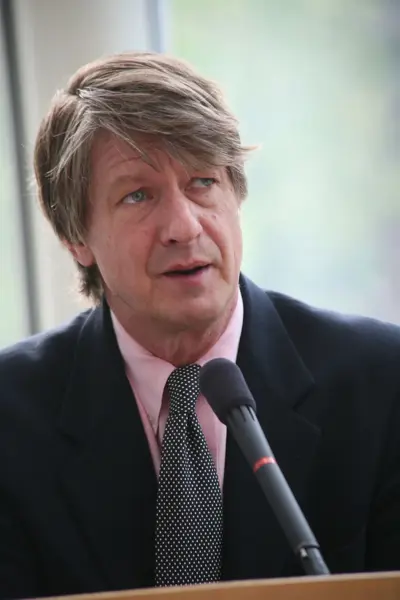
Patrick Jake O'Rourke is an American political satirist and journalist. O'Rourke is the H. L. Mencken Research Fellow at the libertarian Cato Institute and is a regular correspondent for The Atlantic Monthly, The American Spectator, and The Weekly Standard, and frequent panelist on National Public Radio's game show Wait Wait... Don't Tell Me! Since 2011, he has been a columnist at The Daily Beast.
