Lew Wasserman Quotes
I believe Johnson understood that the reason was Vietnam. I also believe that he felt that if there was a way to communicate the real issues in Vietnam, that the reasons would be answered or understood. But there was just no way to communicate.
Wasserman, Lew. Oral History Interview. Lyndon B. Johnson Presidential Library, Austin, TX.

Podharetz was citing the Vietnam war. The two American occasions where the plausibility seemed to fade were the Vietnam War and The Irag war. Both Presidents Lyndon Baines Johnson and George W. Bush as Bismarck predicted, had much political trouble over the wars.


The CIA was supplying planes and pilots to assist anti-Government rebels in their efforts to overthrow Sukarno. Meanwhile, the Secretary of State and other American officials were insisting that America had no involvement in the Indonesian civil war. See {591337}.


Lodge was particularly concerned that under the proposed treaty the United States would be obligated to support the League of Nations military efforts regardless of American public opinion or Congressional action.

See the Macnama telephone quotation when the Joint Chiefs of Staff wanted many more combat soldiers in Vietnam. Johnson felt he had no political choice.

War and international conflict had become very complicated in modern times. Americans and most other people associated victory in war with unconditional surrender. However, since the unconditional surrender is of WWII, no conflict has ended with an unconditional surrender.

He had given a speech and then was accused by several representatives He then returned to the podium with this denial. Throughout history many political leaders have started wars to distract the public from the poor economy of other domestic failures. Many others would never do so. All the former, claim that they are the latter.

For various historical reasons the United States and Iran at that time had no diplomatic relations and there was no easy way for the countries to negotiate their differences. The United States public policy was that Iran would not be allowed to develop a nuclear weapon which was backed up by severe economic sanctions and the threat of military force. Kucinich wanted face to face negotiations and discussions before we resorted to military action.

The U. S. was evacuating all its forces and agents as the Viet Cong overran Saigon. This ended the Vietnam War. The CIA, had been telling the President and the National Security Staff that the Army reports were exaggerated and we were not faring well in the Vietnam War. Events proved them right. Their earlier track record, especially with President Nixon was very poor in intelligence analysis and prediction. See {634511}, {634509}, and {634503} for Nixon’s view of the CIA.

sending American troops to Vietnam

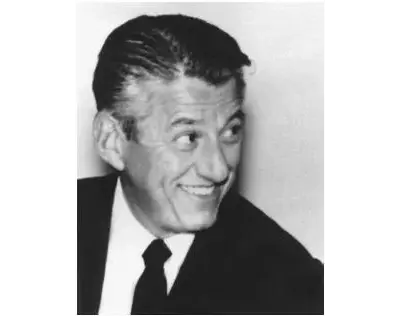
Lewis Robert Wasserman was an American talent agent and studio executive, described as "the last of the legendary movie moguls" and "arguably the most powerful and influential Hollywood titan in the four decades after World War II." His career spanned the nine decades from the 1920s to the 2000s; he started working as a cinema usher before dropping out of high school, rose to becoming the president of MCA and led its takeover of Universal, during which time Wasserman “brought about changes in virtually every aspect of show business.” In 1995, he was awarded the Presidential Medal of Freedom by President Bill Clinton. Several years later, he spoke of his ongoing work at Universal to Variety, saying, "I am under contract here for the rest of my life, and I don't think they would throw me out of my office - my name is on the building."
