Will Durant Quotes
The victors called the revolution a triumph of liberty; but now and then liberty in the slogans of the strong means freedom from restraint in the exploitation of the weak.
Durant, Will. The Life of Greece: Being a History of Greek Civilization from the Beginnings, and of Civilization in the Near East from the Death of Alexander, to the Roman Conquest. Simon and Schuster, 1939.


And as the leader of the exploited, after his revolution he became a dictator himself, albeit a very popular one amongst most Cubans.

While the intelligence apparatus of Great Britain and America completely missed the collapse of the Soviet Union, one man, Levin, clearly predicted it. This quotation is from that article.

By producing growth and an increasing standard of living and universal education, capitalism’s citizens have the time, education, and resources to protest and produce social unrest. However, that assumes that there is also a democratic state. For Schumpeter and many others, capitalism and democracy go hand in hand, but many point to historical examples of one developing faster than the other.


While France was in the midst of a violent revolution, the American debate was on the power and prestige of the Presidency. Then Vice President John Adams was a proponent of a strong executive. Most others were not.


The nobles of the city were in rebellion and fought the English Prince of Wales. When the city was taken, the poor people as well as the nobles were executed for their part in the “rebellion.” However, the poor had no say in the matter, and it was not they who ordered the city gates shut and decided to undergo a siege, which in this case was not successful. Limoges was a heavily walled city, well provisioned for a siege, but the English had miners who undermined part of the city walls and crashed them into the moat and allowed the English to walk in easily.

The description is of the Mexican conquest of Arizona and the Indian revolt. See {612107}


The slogan was made famous by James Larkin, 1875–1947, Irish trade union leader who used it frequently and whose memorial statue in Dublin contains the quotation in French, English and Irish.


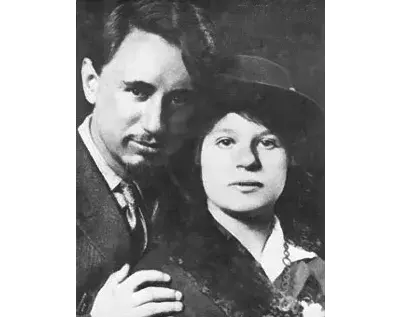
William James Durant was a Russian born, historian, and philosopher. He became best known for his work “The Story of Civilization,” and acclaimed 11 volume series written over 50 years in collaboration with his wife, Ariel Durant, and published between 1935 and 1975. He was earlier noted for The Story of Philosophy (1926), described as "a groundbreaking work that helped to popularize philosophy". They were awarded the Pulitzer Prize for General Non-Fiction in 1968 and in 1977, the Durants were presented with the Presidential Medal of Freedom.
