Bernard Levin Quotes
A new Russian Revolution is inevitable, and that it may come much sooner than anyone would now dare to hope… I do not believe it possible that the thirst for freedom and decency in the countries of the Soviet Empire can remain much longer unslaked, and that any attempt either to quench it by total repression or to satisfy it by real reforms, will be cataclysmically destructive of the eroded foundations of the entire State system.
While the intelligence apparatus of Great Britain and America completely missed the collapse of the Soviet Union, one man, Levin, clearly predicted it. This quotation is from that article.
Bernard Levin, 1928-2004, English Political Columnist & Critic, Column, The National Interest, Spring, 1993
Sourced by: Eigen's Political and Historical Quotations


This was one of the first of the world communist leaders who had concluded that the Russian communist state and its revolution had failed. Russia of 1923 was perceived as too dictatorial and not democratic enough. At the same time they thought Russia had not only sold out the democratic nature of communism but also the economic as well by having too much private property and making economic deals with Western capitalists giving concessions of all kinds to Krupp and other major Multinational companies to try and develop international trade and investment. Politically the communist critics thought Russian communism too left wing and undemocratic and economically too right wing and capitalistic.


The “execution” to which she refers was the famous speech given to communist party leaders by Nikita Khrushchev where he publicly revealed the worst crimes of Stalin and Stalinist Russia. Prior to that, publicly Stalin was godlike in the Soviet Union. Decades of disillusionment with Stalinist Russia set the stage for the fall of the Soviet Union which was also accompanied by massive corruption, economic chaos and a diminution of the standard of living of most Russians. Some, including many of the younger people who had not lived through the Stalinist horrors, were resentful that the great era of Soviet military, scientific, and political greatness and dominance was completely overshadowed by the revelation of the purges, gulags, terror and murder. Prudnikova represents that school of thought.


Vladimir Lenin. The two American leftists had been deported from America. Lenin and the Russian leadership was delighted to have these two famous radicals, and they thought they would find Russia wonderful. But soon the Americans discovered that the freedoms that they found so critical did not, and would not, exist in Communist Russia. After two years, they left Russia for Canada and Europe where they wrote and castigated Communist Russia to the delight of their old American enemies and the shock of many of their old American friends. Lenin was glad to be rid of them. They were as much of a threat to his regime as they were to the United States of the time.

She was one of the few Western journalists who was in Russia at the outbreak of the Russian Revolution.
Although he was a Marxist, he was also a democrat. He was one of the first leftists to criticize the Russian Revolution. The letter was widely published. There were few left wing intellectuals who would take Lenin on at the time but Gorter was one.


Vladimir Lenin. One of the claimed benefits of Capital Punishment has always been the inhibition of others, but it turned out that it was never very effective at that. However, prevention was Lenin’s major objective so he ordered public hanging instead of shooting—the usual method of execution at the time. This infamous quotation started the new Russian government off on a horrible record of civil and human rights. The people hanged were not particularly guilty of any crime. They were just people who had gotten, or whose family was, rich under the Czar. The disregard for rule of law was most dramatically evidenced by this Lenin order. Needless to say, rich people the world over, saw a great threat to their lives from this new state wanting to export its philosophy.

China had learned to grow new crops from the Americas and their greater ability to produce food led to large population growth which was straining the other national resources and the economy, technology and government could not handle the growth, producing much unhappiness and discontent.


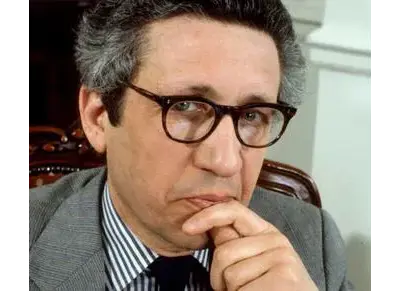
Henry Bernard Levin CBE was an English journalist, author and broadcaster, described by The Times as "the most famous journalist of his day". The son of a poor Jewish family in London, he won a scholarship to the independent school Christ's Hospital and went on to the London School of Economics, graduating in 1952. After a short spell in a lowly job at the BBC selecting press cuttings for use in programmes, he secured a post as a junior member of the editorial staff of a weekly periodical, Truth, in 1953.
