Vladimir Lenin Quotes
That’s a very bourgeois notion. We’ve got enemies all around us, White Russians against the revolution, massive unemployment. We can’t have freedom of speech.
Vladimir Lenin. The two American leftists had been deported from America. Lenin and the Russian leadership was delighted to have these two famous radicals, and they thought they would find Russia wonderful. But soon the Americans discovered that the freedoms that they found so critical did not, and would not, exist in Communist Russia. After two years, they left Russia for Canada and Europe where they wrote and castigated Communist Russia to the delight of their old American enemies and the shock of many of their old American friends. Lenin was glad to be rid of them. They were as much of a threat to his regime as they were to the United States of the time.
Nikolai Lenin, 1870-1924, Russian Communist Premier, Statement to Emma Goldman and Alexander Berkman
Sourced by: Eigen's Political and Historical Quotations

Although he was a Marxist, he was also a democrat. He was one of the first leftists to criticize the Russian Revolution. The letter was widely published. There were few left wing intellectuals who would take Lenin on at the time but Gorter was one.


She was one of the few Western journalists who was in Russia at the outbreak of the Russian Revolution.

Vladimir Lenin. While Lenin was of this view, Stalin and other hard liners disagreed. They not only imposed their brand of communism on their own people via force with terrible consequences for any dissidents, but the Soviet Army imposed Communism on most of the states of Eastern Europe, and those states in turn used their Armies and secret police to impose it on their own citizens.


Russian Tanks moved into Prague and returned “order” ending the reform. Dubcheck was arrested and flown to the Soviet Union.


This was a very important quotation in that Sartre was a very influential liberal philosopher and when he condemned Russian communism, many other liberals opposed communism, and those who had already felt vindicated in their decision.


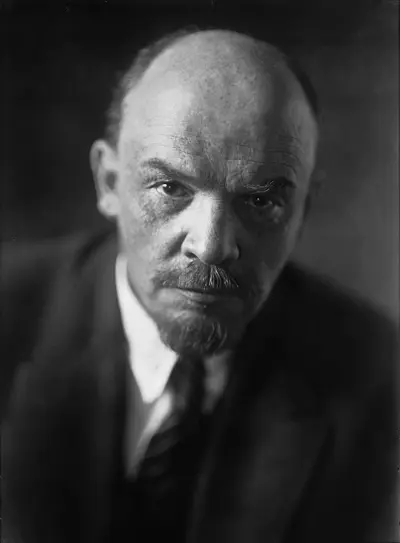
Vladimir Ilyich Ulyanov, better known by his alias Lenin, was a Russian revolutionary, politician, and political theorist. He served as the first and founding head of government of Soviet Russia from 1917 to 1924 and of the Soviet Union from 1922 to 1924. Under his administration, Russia, and later the Soviet Union, became a one-party socialist state governed by the Soviet Communist Party. A Marxist, he developed a variant of this communist ideology known as Leninism.
