Albert J. Nock Quotes
The surest way to make our youth suspect that there may be something in Communism would be for the government to outlaw it.
Albert J. Nock, 1873–1945, Philosopher, educational theorist, social critic, Philosophical founder of the modern, Extreme Libertarian Conservative movement, Frequent Statement
Sourced by: Eigen's Political and Historical Quotations


From the latter part of the 20th century onward, religious nationalism was no longer a force for most religions and nations except Muslim countries. It was the only religion left where a large proportion of the adherents saw no distinction between the religion and the government. Nations that had separation of church and state were not conducive to the extreme fundamentalist form of Islam where the Secular Leader and the Religious leader was to be embodied as a single person. As a result Islamic religious nationalists argued for a Theocracy and at times fought for it with violent means. The secular government typically, to curtail the violence and prevent a religious takeover, often outlawed the extreme religious Islamic parties. While Aslan cites the Muslim Brotherhood failure in Egypt as a desirable outcome, the only way the other forces of Egyptian society could prevent the Islamists from taking over turning the country into a theocracy was to forcefully repress the extremists. The Turkish outcome was much better, but there was the threat of repression of the Justice and Development Party when it won a majority control of the government. There were explicit threats that if it tried to weaken the secular nature of the government as Ataturk had formulated it, the military would come “out of the barracks” and oust the government as they had done before. There were nations like China which persecuted religions such as certain forms of Christianity, but those religions were not fighting for religious nationalism. They only wished the freedom to practice their religion and had no program or theology that argued for Christianizing the government. The Tamil Hindus of Sri Lanka did not want a Hindu government and were perfectly free to practice their religion. The problem was that they felt that there was systemic social and economic discrimination against the Tamils and they fought for independence—not of a Hindu state, but of a secular, nondiscriminatory state of equal opportunity.


The President was reacting to a chain of vents whereby Sony Entertainment produced a satiric movie which offended the leadership of North Korea who condemned, threatened and may have launched a cyberattack on Sony. That company reacted by withdrawing the movie and the President thought that was a mistake despite the fact that there were threats against theaters showing the movie and people attending the showings.

Vladimir Lenin. The two American leftists had been deported from America. Lenin and the Russian leadership was delighted to have these two famous radicals, and they thought they would find Russia wonderful. But soon the Americans discovered that the freedoms that they found so critical did not, and would not, exist in Communist Russia. After two years, they left Russia for Canada and Europe where they wrote and castigated Communist Russia to the delight of their old American enemies and the shock of many of their old American friends. Lenin was glad to be rid of them. They were as much of a threat to his regime as they were to the United States of the time.


This quotation is very interesting in that many of Mrs. Roosevelt’s detractors constantly accused her of being a communist. They obviously had not read this column of any of the many where she shows antipathy to Communism.

The Red Scare had affected much of the country. The House Un-American Activities Committee had frightened much of the country claiming that the Communists had infiltrated the government. But when facts and proof were demanded, all they came up with some workers in the Hollywood film industry who had gone to communist meetings and some who had joined the party before the War when The Great Depression was still plaguing the country. The Hollywood and TV executives caved in to the political demagogues and fired and blacklisted not only the communists but those who refused to testify. The actors and musicians could not work for several years until the country came to its senses, but the screenwriters wrote under false names. At least one Academy award was won that way.


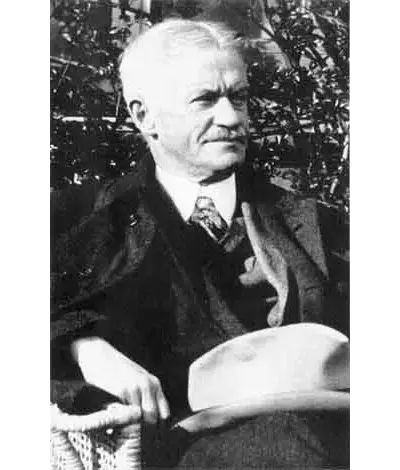
Albert Jay Nock was an American libertarian author, editor first of The Freeman and then The Nation, educational theorist, Georgist, and social critic of the early and middle 20th century. He was an outspoken opponent of the New Deal, and served as a fundamental inspiration for the modern libertarian and conservative movements, cited as an influence by William F. Buckley Jr. He was one of the first Americans to self-identify as "libertarian". His best-known books are Memoirs of a Superfluous Man and Our Enemy, the State.
