Eleanor Roosevelt Quotes
The real strength of the democratic theory in opposition to the fascist or communist is that the fascist frankly states that certain people will tell other people what they shall do to be happy, and those other people have little or nothing to say about it. In theory the communists were to do everything in common, in practice a small group there also tells other people what they shall do to achieve their objectives. So far more nearly than any other form of government, the democratic form has allowed people to shape their own government
This quotation is very interesting in that many of Mrs. Roosevelt’s detractors constantly accused her of being a communist. They obviously had not read this column of any of the many where she shows antipathy to Communism.
Eleanor Roosevelt, 1884-1962, First Lady (Franklin Delano Roosevelt), U. S. Delegate to the United Nations, Column, My Day, April 27, 1937
Sourced by: Eigen's Political and Historical Quotations


To modern Americans, this quotation is shocking. The thought that the United States Army could publish such a statement is hardly believable. Many first reactions assume that there was some mid level fascist officer in a training department which issued it. However this was not the case. It was issued in the name of the Secretary of War under the signature of Generals C.P. Summerall and Lutz Wahl, Chief of Staff and Adjutant General respectively. This document and others like it together with the views of pro fascist Americans like Henry Ford convinced Hitler and other European fascist leaders that America would not interfere with their designs on Europe.


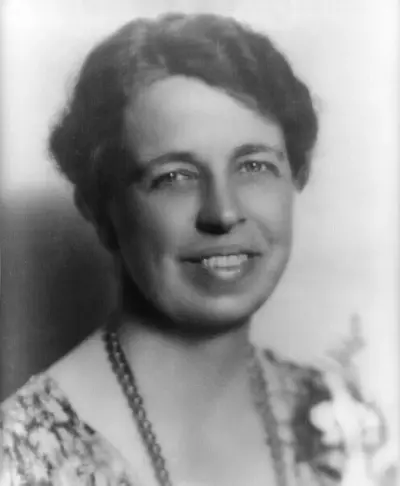
Anna Eleanor Roosevelt was an American political figure, diplomat and activist. She served as the First Lady of the United States from March 4, 1933, to April 12, 1945, during her husband President Franklin D. Roosevelt's four terms in office, making her the longest-serving First Lady of the United States. Roosevelt served as United States Delegate to the United Nations General Assembly from 1945 to 1952. President Harry S. Truman later called her the "First Lady of the World" in tribute to her human rights achievements.
