Albert Einstein Quotes
Within the Russian system, everything depends on the character of those few who hold full power in their hands. The position of the individual within present-day Russia has been described as follows: far-reaching economic security by sacrificing personal liberty.
Albert Einstein, 1879-1955, Nobel laureate in Physics, October 1948
Sourced by: Eigen's Political and Historical Quotations


This is the argument—an essence of Fascism—of every dictator from Julius Caesar onward. See {640792} for more of his views on dictators.


The speech writer, Anthony R. Dolan, had written, “Now and forever, Russia is an Evil Empire. Reagan crossed out “Now and forever” as he had the optimism that the Soviet Union would fall and Russia would reform at a time when only Senator Pat Moynahan had ever suggested the idea.


Vladimir Lenin. The two American leftists had been deported from America. Lenin and the Russian leadership was delighted to have these two famous radicals, and they thought they would find Russia wonderful. But soon the Americans discovered that the freedoms that they found so critical did not, and would not, exist in Communist Russia. After two years, they left Russia for Canada and Europe where they wrote and castigated Communist Russia to the delight of their old American enemies and the shock of many of their old American friends. Lenin was glad to be rid of them. They were as much of a threat to his regime as they were to the United States of the time.


Historically, most dictators have announced their worst intentions and in many cases were not believed by much of the world who then learned that they had made a serious error.

Lev Davidovich Bronstein

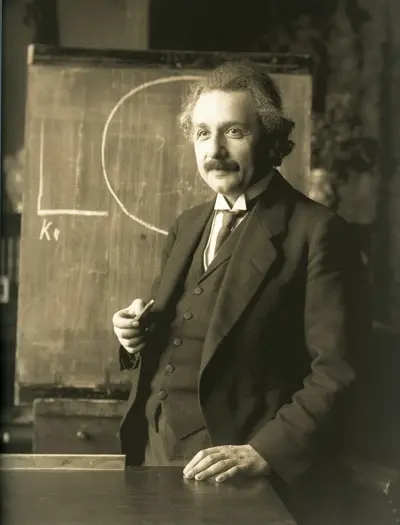
Albert Einstein was a German-born theoretical physicist, widely acknowledged to be one of the greatest physicists of all time. Einstein is known for developing the theory of relativity, but he also made important contributions to the development of the theory of quantum mechanics. Relativity and quantum mechanics are together the two pillars of modern physics. His mass–energy equivalence formula E = mc2, which arises from relativity theory, has been dubbed "the world's most famous equation". His work is also known for its influence on the philosophy of science. He received the 1921 Nobel Prize in Physics "for his services to theoretical physics, and especially for his discovery of the law of the photoelectric effect", a pivotal step in the development of quantum theory. His intellectual achievements and originality resulted in "Einstein" becoming synonymous with "genius".
