Murray Rothbard Quotes
...The very nature of interstate war puts innocent civilians into great jeopardy, especially with modern technology.
Rothbard, Murray N. The Ethics of Liberty. Humanities Press, 1982.


Ironically, one of the major objections to drone strikes is that they have caused civilian casualties.

Bombing had reached the point where conventional bombing raids on industrial cities like Tokyo and Hamburg produced even more civilian casualties than did the atomic bomb at Hiroshima. Tibbets’ view, through the lens of hindsight, was developed by many of the Allied servicemen who had been forced into war by expansionist and militaristic nations like Japan and Germany both of which placed much of their war material manufacturing capability in the midst of their otherwise civilian cities. Both brutally violated the laws of war and committed atrocities many times over before the allies began retaliating. There are still some who believe that it was wrong to drop the atomic bomb on Japan. Some even feel that the mass bombing of Japanese and German cities in retaliation and in furtherance of the war effort was morally wrong. But at the time, the millions of casualties anticipated in the invasion of the Japanese mainland, persuaded virtually every American soldier and civilian that there was nothing wrong with use of the Atomic bomb, and many saw it as an absolute Godsend to prevent all the American and Japanese causalities that would have come otherwise. Many scholars remark on how it was virtually impossible to find any significant number of misgivings before or just after Hiroshima. Tibbet’s view was typical.

The British and American bombing of Germany had become so effective that most of the German industrial system was destroyed. However, early in the War, Germany had violated the Geneva Convention and was indiscriminately bombing London and other part of England. In addition the German Air Force had bombed Warsaw, and many other cities throughout Europe. The German’s had killed over 20 million Europeans. When the Allied bombing produced high collateral damage against civilians, some argued that even though German had deliberately used this tactic, the allies should stop the saturated bombing if there were to be high civilian collateral damage. Others argued that it was unfortunate but a military necessity. There were others like Brenen, who argued that killing German women and children was desirable and just.

It is easy for those in London to wish for missiles and other weapons to be launched at others. If an Iranian missile were to hit Israel, he would celebrate. Then when the Israeli retaliation strike hits Iran, he will be among the first to call for a cease fire and plead for intervention lest there be bloodshed in Iran. Somehow the Middle East has a disproportionate number of people who are terribly enthused about attacking others without considering the consequence of the retaliation and counter attack.

The day before, Helms’ deputy testified about the high number of civilian casualties that American bombing of North Vietnam had caused.


The Blair Administration issued a "Report" they had "obtained" supporting the American.


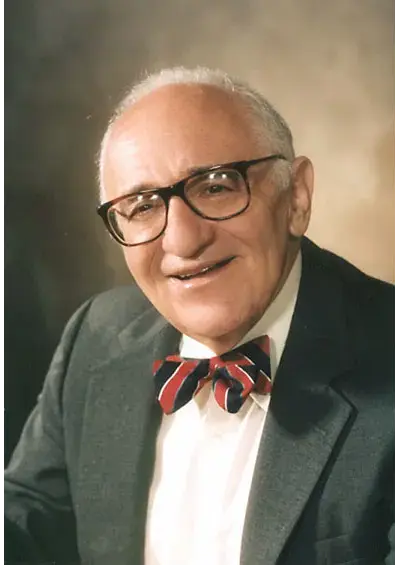
Murray Newton Rothbard was an American heterodox economist of the Austrian School, economic historian and political theorist. Rothbard was the founder and leading theoretician of anarcho-capitalism, a staunch advocate of historical revisionism and a central figure in the 20th-century American libertarian movement. He wrote over twenty books on political theory, revisionist history, economics, and other subjects.
