Dan Quayle Quotes
[The US is] naked, absolutely nude, to attack [by the Soviets].
"Quayle on Defense." The New York Times, 15 Oct. 1988.

With the successful Chinese Communist Revolution, the Nationalists were driven off the mainland of China and occupied the island of Formosa (Taiwan) and had a small garrison of soldier on two tiny islands off the Chinese Coast, Quemoy and Matsu. The communist Chinese government wanted control of all three of the Nationalist held islands. U. S. Military doctrine at the time planned for nuclear retaliation against China for an attack on either of these two tiny islands which had no resources and no population other than a garrison of nationalist Chinese troops. This was the first time that American officials came to grips with a problem that nuclear weapons were so powerful a weapon that it was practically impossible to use them on a limited basis. The threat by any of the nuclear powers of nuclear attack for minor problems simply became not credible. No country would risk a nuclear war for two uninhabited islands in this case and Smith was one of the first leaders to perceive this.


The Booklet told people that even under an atomic attack there would be many survivors and it was everyone’s job to increase the number of survivors by taking precautions like building fallout shelters and maintaining a supply of food and water at home and ducking under desks and tables if there was an atomic attack. The implication was that despite the great firepower of the then Hydrogen Bombs there would be great survivability. The suggestions for protection ranged from minimal likely effect to absurd. The Publication also bore the imprimatur of the Executive Office of the President for credibility and many people believed it.


Canada had the same absurd civil defense propaganda in the Cold War as the U. S. did. Both governments wanted to persuade their publics that a nuclear attack was survivable.


The Scientific Project that developed the Atomic Bomb. Oppenheimer was the great physicist who directed the successful development of the atomic bomb so as to build the weapon before Hitler did in World War II. However, as the technology evolved, he had doubts as to the wisdom of creating even more powerful hydrogen weapons. His viewpoint was hurting the administration’s policy of rapid unlimited nuclear weapons development, and he was the victim of a character assassination whereby his security clearance was withdrawn. The “father” of the atomic bomb was the first American casualty of atomic weapons development.


This quotation is very important in helping to understand the 1950s in America with respect to nuclear weapons policy. McCormick was one the better educated, sophisticated, and influential Americans. Yet he appears to be a technological and nuclear ignoramous. Most people had not yet realized that atomic weapons were not just much larger traditional bombs. They could do terrible damage, but it would always be localized they thought. Chicago might be destroyed but the people out of range would be OK. He never got it that a dirty bomb could be dropped on Detroit and depending on which way the wind is blowing could wipe out Chicago and much of the Midwest as well. He knew nothing of the genetic effect the radiation, nor the implications for the environment of maintaining a large nuclear manufacturing industry. He and many like him did not realize that after the first bombs were created, how easy it would be for the Russians and others to also develop a nuclear arsenal. And 50,000 warheads was just a matter of effort. The implications of these things would inhibit our carrying out his and others ideological views of foreign policy. Oppenheimer and most nuclear scientists explained all this, but believing them and acting on those beliefs would have been too much of a change.
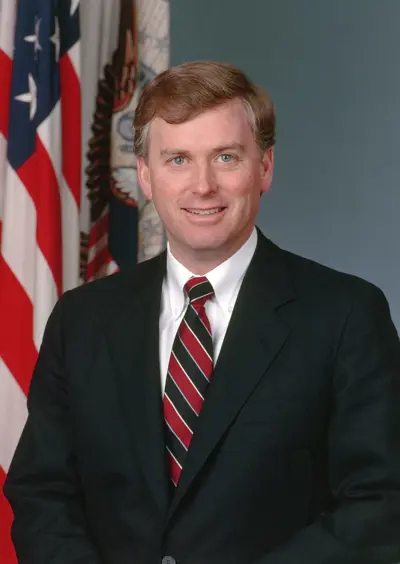
James Danforth Quayle is an American politician and lawyer who served as the 44th vice president of the United States from 1989 to 1993, a U.S. representative from 1977 to 1981 and a U.S. senator from Indiana from 1981 to 1989.
