Viet D. Dinh Quotes
The under-funded and over-extended United States Patent and Trademark Office does not have the resources to adequately evaluate the burgeoning number of applications, and too many low-quality patents are being issued as a result.
Dinh, Viet D. Statement in Support of the Patent Reform Act of 2007. Coalition for Patent Fairness, 2007.


The economic advantage of the North over the South in the Civil War is well known. Not so well-known is the huge technological advantage that the North had. This quotation gives an indication of the extreme difference. The North fought the war on all fronts including the technological one where no weapons and methodologies from the telegraph to the military railroad were critical. The South by contrast did not have the manpower to fight the war and keep industry and scientific technological development going also.

When Secretary of State, Jefferson ran the first American Patent Office. The Patent system was originally and educational program, not an intellectual property program. Inventors would keep all their technological secrets to themselves. The idea behind the original patent system was to give an inventor a limited monopoly on profiting from his invention in exchange for sharing his information and techniques with his countrymen—thus improving the technological competency of the entire society. The very first patents were available for public inspection for that reason. And even today, copies of patents are available easily for almost no cost. And few American ideas worked as well as our early patent system. Through its educational role and technology transfer, America came from technological nowhere to being the pre-eminent inventing nation of the world. The balance between public access to invention and innovation and preservation of some rights to the creator of intellectual property is key to modern development.
When Secretary of State, Jefferson ran the first American Patent Office. The Patent system was originally and educational program, not an intellectual property program. Inventors would keep all their technological secrets to themselves. The idea behind the original patent system was to give an inventor a limited monopoly on profiting from his invention in exchange for sharing his information and techniques with his countrymen—thus improving the technological competency of the entire society. The very first patents were available for public inspection for that reason. And even today, copies of patents are available easily for almost no cost. And few American ideas worked as well as our early patent system. Through its educational role and technology transfer, America came from technological nowhere to being the pre-eminent inventing nation of the world. The balance between public access to invention and innovation and preservation of some rights to the creator of intellectual property is key to modern development.


In the War of 1812, in retaliation of English facilities being attacked by Americans in Canada, the British raided Washington DC and burned the White House. They had also set up a battery of cannon in front of the Patent Office building—one of the most impressive in Washington—and were about to destroy it. The Superintendent came out with this speech. The British officer ordered the cannon removed and the Patent Office with its models was saved.

He worked for General Electric for over 40 years and held 322 patents. However, it was the corporation that financially benefitted from the monopolies granted by the patents. Our legal system assumes that the creative output of an individual who is an employee is the property of the employer just as the output of the slave was the property of the master.


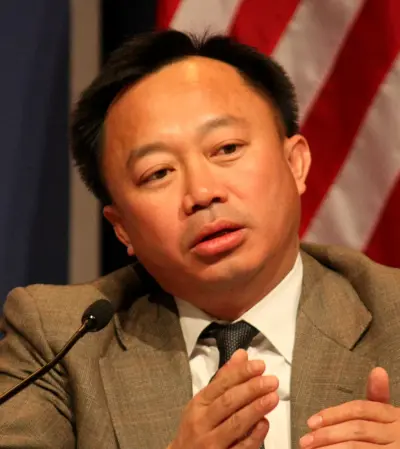
Viet D. Dinh is a lawyer and a legal scholar who served as an Assistant Attorney General of the United States from 2001 to 2003, under the presidency of George W. Bush. Born in Saigon, in former South Vietnam, he was the chief architect of the USA PATRIOT Act and is a former member of the Board of Directors of News Corporation.
