Michael Crichton Quotes
The patent office decided that genes can be patented. This is a fundamental error that looks more and more absurd over time…. Gene patenting is completely contrary to the public interest.
Michael Crichton, Techno Novelist, Speech, National Press Club, November 28, 2006
Sourced by: Eigen's Political and Historical Quotations

This principle justified the Government in allowing a local Indonesian company to manufacture anti-AIDS drugs without paying licensing rates demanded by the drug companies that held the patents. The principle is that patent rights and the desire to profit should not supersede the rights of people to continue to live because they cannot afford the drugs to keep them alive. The local manufacturers provide the drugs to the government at cost of manufacture which is a tiny proportion of the price the patent owner charges.

Science was progressing rapidly and Congress and the other legislatures of the world had not kept up with the scientific, legal or ethical implications of the progress. The result was that once a new technique was perfected, all the institutions were caught :flat footed, and sought out bioethicists to advise them.


At first, there is an advantage to not recognizing copyright and allowing stealing from foreign publishers, but soon the point is reached where the practice precludes the country from developing its own writers and journalists. The same will likely be true for China and other nations where international copyright is not recognized or not enforced.


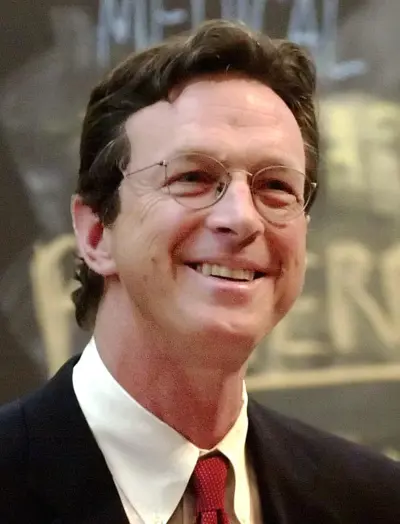
John Michael Crichton was an American author and filmmaker. His books have sold over 200 million copies worldwide, and over a dozen have been adapted into films. His literary works are usually within the science fiction, techno-thriller, and medical fiction genres, and heavily feature technology. His novels often explore technology and failures of human interaction with it, especially resulting in catastrophes with biotechnology. Many of his novels have medical or scientific underpinnings, reflecting his medical training and scientific background.
