Bill Gates Quotes
If people had understood how patents would be granted when most of today's ideas were invented, and had taken out patents, the industry would be at a complete standstill today.
Gates, Bill. "Challenges and Strategy Memo." 16 May 1991. Quoted in Fredric Paul, "Bill Gates' 1991 patent memo," InformationWeek, 11 Jan. 2005.


Even before being an independent country, America had two contrasting and contradictory views of patents—the one that Franklin herein states and the one what was written into the constitution that argued that by granting patents inventors would be incentivized to make their trade secrets public if they had an exclusive monopoly on if for a period of time. Both of these philosophies towards patents have coexisted since then. There was a Federal patent system for those who wanted to use it, and for those who did not, they could enter the invention to the public domain as Franklin urged. Arguably, we have obtained the best of both approaches. Millions of patents have been filed and granted and yet some of the most important inventions have followed the Franklin approach. See the quotes about the Salk Polio Vaccine—{29154} and {29187} and the quote on "open source" computer software—{29676}. With billions of dollars being made by protected software in the early 21st century, over half of the world's computers were operating on systems that was public domain and without charge as just one large example of the Franklin philosophy still coexisting.


In the War of 1812, in retaliation of English facilities being attacked by Americans in Canada, the British raided Washington DC and burned the White House. They had also set up a battery of cannon in front of the Patent Office building—one of the most impressive in Washington—and were about to destroy it. The Superintendent came out with this speech. The British officer ordered the cannon removed and the Patent Office with its models was saved.

When Secretary of State, Jefferson ran the first American Patent Office. The Patent system was originally and educational program, not an intellectual property program. Inventors would keep all their technological secrets to themselves. The idea behind the original patent system was to give an inventor a limited monopoly on profiting from his invention in exchange for sharing his information and techniques with his countrymen—thus improving the technological competency of the entire society. The very first patents were available for public inspection for that reason. And even today, copies of patents are available easily for almost no cost. And few American ideas worked as well as our early patent system. Through its educational role and technology transfer, America came from technological nowhere to being the pre-eminent inventing nation of the world. The balance between public access to invention and innovation and preservation of some rights to the creator of intellectual property is key to modern development.


One major purpose of the patent system is to get inventors to disclose their inventions and explain how they work and in exchange they get a temporary monopoly to profit from the invention. That is why all patents are available to the public so that science can advance if all other see how something was done. Despite the Douglas View, gadgets have been patented if they had some novel element to their functioning.


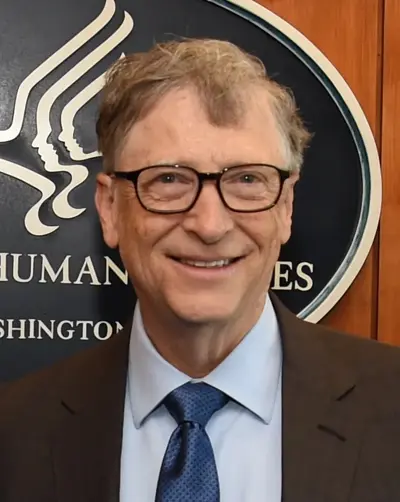
William Henry Gates III is an American business magnate, software developer, investor, author, and philanthropist. He is a co-founder of Microsoft Corporation. During his career at Microsoft, Gates held the positions of chairman, chief executive officer (CEO), president and chief software architect, while also being the largest individual shareholder until May 2014. He is considered one of the best known entrepreneurs of the microcomputer revolution of the 1970s and 1980s. Gates is also co-founder and chairman of TerraPower that is developing next generation traveling-wave reactor nuclear power plants, in an effort to tackle climate change.
