Richard A. Posner Quotes
The future of the nation depends in no small part on the efficiency of industry, and the efficiency of industry depends in no small part on the protection of intellectual property.
Richard A. Posner, Judge, United States Court of Appeals, Rockwell Graphic Systems, Inc. v. DEV Industries, 925 F.2d 17, 1991
Sourced by: Eigen's Political and Historical Quotations


This is a very important quotation in the Patent world. One of the major justifications for giving patent monopoly to an inventor is that without the patent protection people would not invest time, effort or money to invent things. However many of the great inventors have not agreed. The original Constitutional purpose in granting patents was to stimulate disclosure of technology to other inventors and educate the nation. That is why all patents are public and can be viewed by all.

Jefferson had been opposed to manufacturing—see {606441} for his view 27 years earlier.


Industrial spying and trade secret thefts are very common in the South Korean business culture. Bribery of competitor’s employees is common. In the pre WWII period of Japanese control, the Japanese had a policy of keeping Korea technically backward to produce food cheaply and trade the food to Japan and buy manufactured goods from Japan—a classic colonial strategy. Japanese engineers and other technicians would go to Korea set up facilities but never share their knowledge with the Koreans. If technicians were needed, they would have to come from Japan. None the less there is a cultural blindness and Korean firms will commonly steal technology from anyone—partners or others. The South Korean Governments had looked at this with a blind eye. Many Koreans believe that because of past history the only way that they can survive on world competition is to continue to pilfer technology. However, modern South Korea has excellent technicians and scientists in almost all fields and making the cultural shift to a standard that is more consonant with the majority of the industrial democracies is the great challenge.
In the early years of our nation, there was not much intellectual property being developed in America. We were an underdeveloped nation, and we took whatever we could get regardless of laws. Alexander Hamilton for example urged obtaining industrial trade secrets and even machines by whatever means was necessary. However in the latter part of the 19th century, Nathaniel Hawthorns, Mark Twain and other creative Americans persuaded the government to join copyright conventions; we had become the victim of intellectual piracy rather than the pirates. Then we became the leading nation in advocating and enforcing intellectual property rights. This coincided with our becomng the leading producer of intellectual property. Intellectual property rights has always been an issue of “whose ox was gored.” The US position is somewhat hypocritical given our early history. However, respect for intellectual property rights, we now argue, in our modern global economy will encourage businesses to not only invest in developing countries but allow their technology and trade secrets to be used in the developing nation.


This is a very different view from the prevailing American legal and cultural view. The United States grants patents and copyrights even when the taxpayer has paid for much of the research and development, even when the inventor was educated by the state. The difference is an intellectual and philosophical one. America is anxious to incentivize people to create and invent and especially to encourage capital to flow to R&D. Toynbee comes from an intellectual tradition where science and technology was the finest in the world, but it was done by the well-to-do for the sake of doing it. Both approaches had been immensely success for their times, but the need for technological development is so great that we should not limit it to the people of wealth and a social class for whom money may not be a driver while it is for most others.


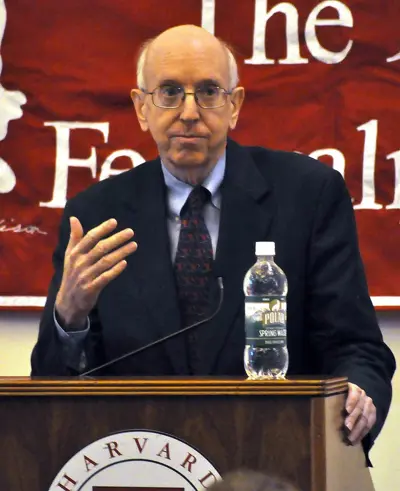
Richard Allen Posner is an American jurist and economist who is a senior lecturer at the University of Chicago Law School. Between 1981 and 2017, he served as a United States circuit judge of the United States Court of Appeals for the Seventh Circuit in Chicago. He is a leading figure in the field of law and economics, and was identified by The Journal of Legal Studies as the most cited legal scholar of the 20th century. He is widely considered to be one of the most influential legal scholars in the United States.
