Alfred Milner Quotes
The traditional policy is absolutely opposed to compulsory labor for private employment... It is a point of fundamental importance that there is no question of force or compulsion, but only of encouragement and advice through the native chiefs and headmen…
1st Viscount Milner. As bad as any colonialism was, compare this to the German approach to native labor {77560}.
Alfred Milner, 1854–1925 Secretary of War & Colonial Secretary of Great Britain, British High Commissioner and Governor of South Africa, British Colonial Policy on Native Labor, Quoted in Evans Lewin, “Liberia and Negro Rule”, The Atlantic Monthly, September 1922
Sourced by: Eigen's Political and Historical Quotations

This was written under the name of Ragnar Redbeard. There are a few scholars who believe that it was written by Jack London, but most credit Desmond.
This is an example of what was one of the worst perversions of slavery. This minister actually argued that Blacks were much better off as slaves and slavery served them well.
In never occurred to him that he and his family were also adverse to the backbreaking stoop labor of cotton picking.

This marvelous quotation gives us a picture of the essence of the conflict in conception of freedom between Southern whites and negroes. There was no way to change the large majority of whites’ opinions and it is easy to see why Jim Crow and Southern discrimination evolved as it did. The emancipated Blacks had insufficient power or resources and there was not enough effort or success at changing white attitudes and no where near enough law enforcement to impose the view on the majority of the Southern white population.


This was a very creative solution to the problem of slavery. Slave holders and their supports have always claimed that the paid valuable money to acquire a slave and slaves were valuable personal property. Freeing slaves was the government confiscating their wealth. The Pennsylvania solution was to say that the labor of a slave for 7 years was worth far more than the cost of a slave, so that under this law, slave owners could get their monetary value back and make a modest profit, and slavery would gradually disappear over a 7 year period if no new slavery were allowed. Although it made a lot of sense, the Southern States felt that their economy was different—that they could never get free white men to pick cotton.
This letter was signed by a local white Priest and two other leading planters. This quotation gives us a marvelous feeling for what occurred when parts of the South was occupied by the Union Army shortly after the Emancipation Proclamation was issued. Minor and his fellows just did not “get it.” The concept of freedom of the slaves was intellectually so foreign to them, that they wanted the Union Army to “compel” the freed slaves to work. They were horrified that slaves went wherever they wanted, and they were most outraged when former slaves who had enlisted in the Army, would “visit” their old plantation setting such a terrible example. The letter gives us a perspective on how difficult it was to change the mental set of Southern Whites and why Reconstruction was so difficult. The year of the letter is somewhat uncertain as the original letter appears to be dated 1862 but the writing is not clear and that date does not comport with the history of the era and we believe 1863 was the correct year. The photograph is of the first official colored troops mustered into the Union Army. They were called the Louisiana Native Guards and contained the ex slaves who went over to the Union side just before the time this slave owner complained. These ex slaves, in uniform, and with arms would sometimes visit the plantations where they and been enslaved, thrilling the remaining slaves and infuriating owners like Minor.

As an entertainer she had toured much of the world and seen American slavery and that of some other nations. She became a staunch abolitionist and like entertainers in the 20th and 21st centuries she used her celebrity to give anti-slavery lectures and perform for audiences where she donated the proceeds of the event to the abolition cause. She is a particularly interesting political figure in that she seems to be one of the first entertainers to perform for a social cause and become an activist.


Liberia was founded by American free Negroes who emigrated. From the beginning there has been a tension between the American founders and their decedents and the indigenous tribes. King, who had just been elected President, was trying to balance the interests and values.

America’s first political economist. By his analysis the percentage of death of slaves in the British West Indies was far greater than that of American slavery. By the time England emancipated its slaves there were far fewer than there should have been unless they had been killed off at a very high rate—usually worked to death, poorly fed, unsanitary and unsafe conditions, and little or no medical care.


The Spaniardes have executed most outragious and more then Turkishe cruelties in all the west Indies
He was one of the strongest English advocates of colonization of the New World. At that time this was as strong an epithet of cruelty as could be made by Europeans. It was an accurate assessment.

The perception of the necessity of slavery was evident very early in the South.
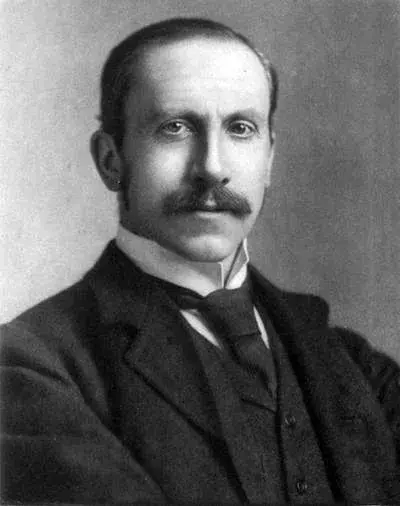
Alfred Milner, 1st Viscount Milner, KG, GCB, GCMG, PC was a British statesman and colonial administrator who played a role in the formulation of foreign and domestic policy between the mid-1890s and early 1920s. From December 1916 to November 1918, he was one of the most important members of David Lloyd George's War Cabinet.
