Samuel Freeman Miller Quotes
The Supreme Court, once in existence, cannot be abolished, because its foundation is not in an act of the legislative department of the Government, but in the Constitution of the United States.
Miller, Samuel Freeman. Lectures on the Constitution of the United States. Banks & Brothers, 1891.


One of the conundrums of our constitutional system is who has the last word as to what the Constitution means. Essentially it is the judicial branch headed by the Supreme Court. But there are those who believe that the current popular majority should have a say in what is or is not constitutional. If so the legislative branch should have the last word. Still others say that the President is the only person elected by ALL the people, so his opinion most reflects the will of the public. And then there are most who argue that the Constitutional system was created just to avoid the power of currently popular majorities, and the courts should decide based on the Constitution itself. So the statement has very little meaning except that Phillips thinks that the courts have too much power. Whoever gets to decide what is or is not Constitutional will be accused of being “over” the Constitution by those who don’t like the decisions. In our system, that is the courts.

This concept of balance of power and the equal role of the judiciary is actually quite rare. Even in Parliamentary democracies the parliament can override any court interpretation. In England, the upper legislative house, the House of Lords, actually serves as the nation’s highest or supreme court. And these “Law Lords” can override all regular judicial bodies.

Hatch was the chairman of the Senate Judiciary Committee at the time.


The president was asked if he supported the Supreme court's school desegregation decision:


When asked for his position on abortion, candidate Bush answered:. Nine years later, President Bush proposed a constitutional amendment to overturn the Supreme Court's ruling on flag desecration.

Referring to the Brown v. Board of Education, the Topeka, KS, Supreme Court school desegregation decision:


Cummings was arguing against a Constitutional amendment. His alternative led to Roosevelt's court packing schema.


The view that the Supreme Court was the final arbiter of constitutional controversies was not held in early America.

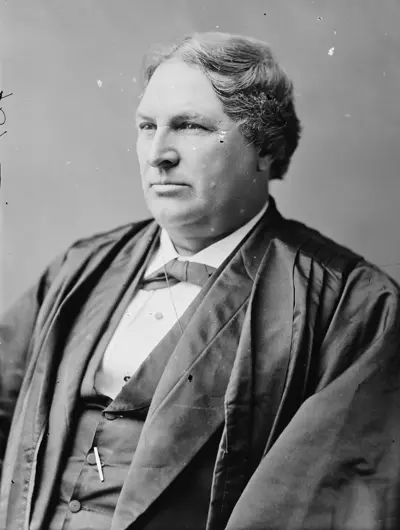
Samuel Freeman Miller was an associate justice of the United States Supreme Court who served from 1862 to 1890. He was a physician and lawyer.
