Robert Bork Quotes
The Constitution is ... power. That is why we see political struggle over the selection of judges who will wield that power.
Robert Bork, U. S. Solicitor General, Judge, U. S. Court of Appeals, Washington DC, The Tempting of America, 1991
Sourced by: Eigen's Political and Historical Quotations

Barstow the Democratic Governor who had no serious opposition in 1853 found himself challenged for reelection by Coles Bashford of the new Republican Party. The Board of Canvassers reported that Governor Barstow had won reelection but by less than 200 votes in the whole state. The Republicans charged that there had been fraud in some of the rural districts and petitioned the Wisconsin Supreme Court which ruled that nonexistent precincts had indeed voted for the Governor. The Barstow forces however refused to recognize the decisions of the court claiming that the court had no jurisdiction over the Board of Canvassers who were part of the executive branch. The Republicans held their own inauguration and two men claimed to be Governor. But the Governor claimed that the state constitution did not give the court any authority to deal with the crisis, He even called out the State Militia to maintain his office and intimidate the Supreme Court and keep the “other governor” from the state house. Nonetheless the court ruled that even the Governor had to obey the law and the Supreme Court would determine what the law was. Barstow finally “resigned.” See {587915} & {587914}.


Referring to the Brown v. Board of Education, the Topeka, KS, Supreme Court school desegregation decision:

Cummings was arguing against a Constitutional amendment. His alternative led to Roosevelt's court packing schema.

The Roosevelt administration had stemmed the tide of Hoover’s Great Depression but the nation had not yet recovered. The New Deal measures, most of which would be considered fundamental to good government 50 years later was being constantly thwarted by a Supreme Court with a strong arch conservative majority headed by James McReynolds, a virulent, overt, anti-Semitic racist, who hated FDR—see {616652} and {585241}. The situation was to many like that which existed before the Civil War when the Court rendered the Dred Scott decision that so harmed the nation. Frankfurter, not then a Supreme Court Justice, urged Roosevelt to do something lest the American Public lose all respect for the Court and our Constitutional system and have the nation harmed by not allowing reforms like child labor laws to go through. The court actually ruled by a narrow majority that the government could not pass laws making it illegal for 11 year old children to work in coal mines or factories. FDR attempted to add more justices turning the majority into a majority—“packing the Supreme Court”, but that politically backfired. Some of the reforms never went through while others needed Constitutional Amendments like the end to Prohibition.

Powell was the Secretary of State and Addington kept advising the administration that as long as the President was acting in defense of the country in his capacity as Commander in Chief, he did not have to obey any existing laws that had been Constitutionally passed which in the opinion of the President restricted or limited the President or the executive branch. Addington was an attorney and Assistant to the Vice President, but he was given much responsibility for administration policy. Powell the Secretary of State of the Administration could not have disagreed more and although most politicians including Republicans disagreed with the Addington thesis, Powell was one of the few Republicans to criticize the Addington position.

Judicial Review is the principle which allows a court—judges—to declare an act of the legislature or the executive improper and unlawful. It is a standard principle of American government yet it was not explicitly stated in the Constitution. Hence to some, there is a question about the legitimacy of Judicial Review itself. Many nations do not have it. Many people think it is the most important aspect of a democratic society as it provides a check on both the executive and the legislature.


This concept of balance of power and the equal role of the judiciary is actually quite rare. Even in Parliamentary democracies the parliament can override any court interpretation. In England, the upper legislative house, the House of Lords, actually serves as the nation’s highest or supreme court. And these “Law Lords” can override all regular judicial bodies.
Marshall is famous for, as Chief Justice, establishing the principle that the Judiciary can override Congress and the Executive in determining Constitutionality. However, as this quotation illustrates this principle had been discussed in open debate on the ratification of the Constitution. It was not simply a grab for power by a Chief justice; he uttered this quotation long before he ever suspected he would be a judge but actually spent much of his career in the executive and legislative branch of government.

One of the conundrums of our constitutional system is who has the last word as to what the Constitution means. Essentially it is the judicial branch headed by the Supreme Court. But there are those who believe that the current popular majority should have a say in what is or is not constitutional. If so the legislative branch should have the last word. Still others say that the President is the only person elected by ALL the people, so his opinion most reflects the will of the public. And then there are most who argue that the Constitutional system was created just to avoid the power of currently popular majorities, and the courts should decide based on the Constitution itself. So the statement has very little meaning except that Phillips thinks that the courts have too much power. Whoever gets to decide what is or is not Constitutional will be accused of being “over” the Constitution by those who don’t like the decisions. In our system, that is the courts.


The view that the Supreme Court was the final arbiter of constitutional controversies was not held in early America.

Jefferson’s fears were later reinforced by John Marshall in Marbury v. Madison {606468}

Hatch was the chairman of the Senate Judiciary Committee at the time.


The president was asked if he supported the Supreme court's school desegregation decision:


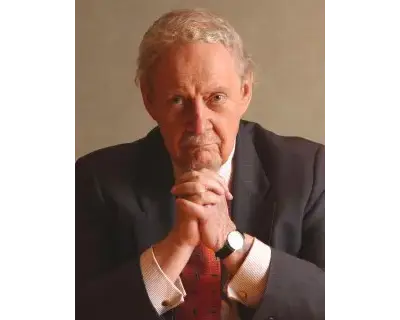
Robert Heron Bork was an American judge, government official, and legal scholar who served as the Solicitor General of the United States from 1973 to 1977. A professor at Yale Law School by occupation, he later served as a judge on the influential U.S. Court of Appeals for the D.C. Circuit from 1982 to 1988. In 1987, President Ronald Reagan nominated Bork to the U.S. Supreme Court, but the U.S. Senate rejected his nomination.
