Albert J. Nock Quotes
The State did not originate in any form of social agreement, or with any disinterested view of promoting order and justice. Far otherwise. The State originated in conquest and confiscation, as a device for maintaining the stratification of society permanently into two classes-an owning and exploiting class, relatively small, and a propertyless dependent class. . . . No State known to history originated in any other manner, or for any other purpose than to enable the continuous economic exploitation of one class by another.
Nock, Albert J. Our Enemy, the State. William Morrow & Company, 1935, p. 22.


The hymn was officially removed from the Anglican Hymnal in 1963. The hymn is a good example if how Christianity was used to reinforce the status quo of a riged English class system. God ordained the position of all men and onky he could change that. Hard work, education, personal qualities were all for naught. And no one should question the fairness of the status quo, as it was God’s will.

The Virginia Colonial Governor returned to England to protest the economics of the tobacco trade and the monopolies that then prevailed:


This was the prevailing view in Europe at the time; it was less so in the United States, where there were so many people who owned their own land and farmed it or developed manufacturing facilities and hence were the mind AND the limbs of the enterprises. However, the upper classes tended to agree with the European view. The difference between the American and European views was one of class mobility. In America “limbs” who demonstrated capacities of “mind” were much more able to advance in America. However, even into the 21st century here was a general feeling of the upper class that the “minds” made the critical and impactful decisions. This is one of the reasons that executive and CEO pay advanced so rapidly when compared with workers (the “linbs”).


The doctrine of the Southern Cotton industry before the Civil War was that Capital should not only use labor and control labor, but that in true capitalism, Capital should own labor—slavery. This Southern hostility towards labor rights and organized labor was derived from this extremist view of capitalism.


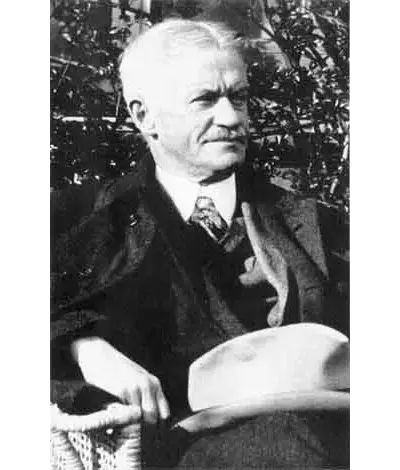
Albert Jay Nock was an American libertarian author, editor first of The Freeman and then The Nation, educational theorist, Georgist, and social critic of the early and middle 20th century. He was an outspoken opponent of the New Deal, and served as a fundamental inspiration for the modern libertarian and conservative movements, cited as an influence by William F. Buckley Jr. He was one of the first Americans to self-identify as "libertarian". His best-known books are Memoirs of a Superfluous Man and Our Enemy, the State.
