Dwight D. Eisenhower Quotes
The speed, accuracy and devastating power of American Artillery won confidence and admiration from the troops it supported and inspired fear and respect in their enemy.
Eisenhower, Dwight D. Report by the Supreme Commander to the Combined Chiefs of Staff on the Operations in Europe of the Allied Expeditionary Force, 6 June 1944 to 8 May 1945. U.S. Government Printing Office, 1946.


The Americans had attacked the Belgian city of Brest and had been repulsed by a well fortified and led German contingent. Analysis of the wartime situation showed that Brest, a port city was no longer necessary for the Allied supplies as numerous other ports were taken and were available. Many of the officers wondered why Bradley wanted them to attack and defeat the Germans in Brest when all they had to do was surround them and eventually starve them out. Bradley’s response explained a subtle aspect of military and foreign policy. It is that the United States Army, once committed, will never be defeated or stopped. Had the Americans not already attempted to take Brest, they would not have bothered at this stage of the war, but since they had, it was imperative that they succeed. Otherwise, it was felt that Allies and enemies would not take future American threats as seriously and that the morale of American soldiers would even be affected if they thought they could be beaten. A similar problem occurred in the Vietnam War and later in the Iraq war. Once the short term military necessity of fighting was gone, the long-term factors came into play and often will. Others argue that the United States military is so strong and well equipped, that it no longer necessary to take casualties just to prove a psychological point.

Clark had commanded the American and NATO forces in the Serbian War where all the military and political objectives were accomplished with heavy losses to the Serbian’s and none to the allied side—what many think was the most successful war in American History. Like Eisenhower in WWII one great challenge was the political and strategic one of keeping the coalition of all the allied governments working together. His perspective had been like Eisenhower and other officers in history was much wider and geopolitical than most military officers.

He had wanted more troops for the Afghan War than President Obama would approve. The Republican members of the Congress tried to make the difference a major issue of a President not supporting his commanders. The General made this brilliant response.

During World War II, she was a correspondent covering the Flying Tigers in Burma. Her basis for this propaganda statement was the ratio of Japanese to American plane losses in aerial combat in that particular theater of the war.

If a military loses a war, it has shown to be insufficient quality; if it wins, the evaluation is good. With all the talk about what makes for an effective and quality military, as the General states, it is war that is the final arbitrator. So ideally we never want to really know how good our military is.


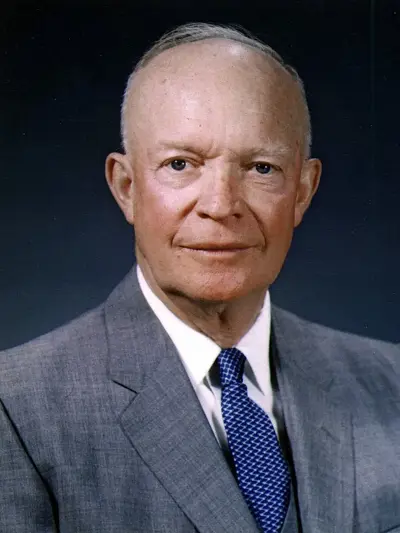
Dwight David "Ike" Eisenhower GCB OM GCS CCLH KC NPk was an American military officer and statesman who served as the 34th president of the United States from 1953 to 1961. During World War II, he became a five-star general in the Army and served as Supreme Commander of the Allied Expeditionary Force in Europe. He was responsible for planning and supervising the invasion of North Africa in Operation Torch in 1942–43 and the successful invasion of Normandy in 1944–45 from the Western Front.
