Robert E. Lee Quotes
The slaves are freed by an accident. An accident of war's necessity - not on principle. The manner of their sudden emancipation, unless they are removed, will bring a calamity more appalling than the war itself. It must create a race problem destined to grow each day more threatening and insoluble....
Robert E. Lee, 1807-1870, Confederate General-in-Chief, 1863
Sourced by: Eigen's Political and Historical Quotations

For more about the Bureau. See {629185}.and {629187}.


The first sentence is inscribed on the Jefferson Memorial in Washington DC. The last two sentences are rarely quoted.

This quotation is very interesting historically. Despite the fact that Washington DC was a thoroughly racially segregated city, and the Southern racists controlled much of Congress, Blacks as well as whites were welcome in the Congressional galleries, and they attended many debates. Slavery and equality were not just debated in the 1850s but the issue was in constant friction from the earliest Congress.

See {625675}, {625686}, {625683}, {625682}, {625676} for additional quotations arguing for Black emigration.

His solution was not to change the prejudice or improve the opportunity for Blacks but to have complete separation of the races. See {625687}.


Before the civil rights act was passed, most labor unions will racist and discriminated against black workers. The United Auto Workers union was an exception and Reuther was a strong advocate of desegregation and equal rights.


Jamaica, then part of the British Empire which had outlawed slavery, was quite racially integrated with negroes and mulattos in civil positions such as magistrate. When the ship landed, the slave, John Anderson, was kept locked below deck since if he ran off and reached shore, the Jamaican authorities would have declared him a free man. The presence of the captive negro slave leaked out and a group of Jamaicans boarded the ship uninvited and forcibly removed Anderson, He was taken before a Jamaican magistrate who declared him a free person. The ship’s captain demanded that the authorities return the American private property which had been stolen from an American ship by a “mob”. Harrison, the US Counsel complained to the Jamaican Governor of the “Insult” to the American Flag that had taken place and demanded redress. In both efforts, the original decision of the magistrate was supported and Anderson was a free man. Harrison, an ardent Southerner from Virginia was apoplectic and asked the State Department to make this case a major issue in relations with London. His description of the public opinion then in Jamaica was classic. His racial bias was even supplemented by a virulent anti-Semitism because not only had Jewish Jamaican merchants supported abolition of slavery but some had intermarried with Negroes who had converted to Judaism.


Louis Napoleon Bonaparte. The “colonies” to which we was referring were the French Colonies in the Caribbean—particularly Haiti. The Black slaves had revolted against the slave-owners and had taken over all positions of authority and wore the uniforms and symbols of power including the epaulettes—the gold braid shoulder pieces that were symbols of high rank in military and diplomatic uniforms which were worn on all official occasions. Napoleon never did make good on his vow. He had many more problems with his own wars and governance in Europe. This quote does demonstrate the racism that existed in supposedly tolerant France.

This was part of his presentation to Northern influential business men showing them what he claimed was the New South. He was particularly complimentary about the negro Christian viewpoint that inhibited revenge or retaliation for their terrible treatment. The favorable lines about Negroes were well received by Northerners. However, they were mostly unaware of his racist views he expressed when in the South. See Quotation 643649.

She was one of the early abolitionists. Despite the Southern attempted repression of information of slave resistance, some of the facts emerged and were well known in the North. The South tried to suppress these incidents lest other slaves get ideas from it. Also the Southerners often maintained that Africa was so primitive and underdeveloped, that the slaves were better off in America; these actions of rebellion belied this notion.
Parker and other escaped slaves in Christiana fought off slave catchers and killed the slave owner leading them. Charged with treason, he escaped to Canada with his family and lived there the rest of his life. While not a polished writer, after he himself had escaped and went to Christiana and leaned to read and write. He wrote this narrative of his life as a slave—one of the few written works we have from slaves.
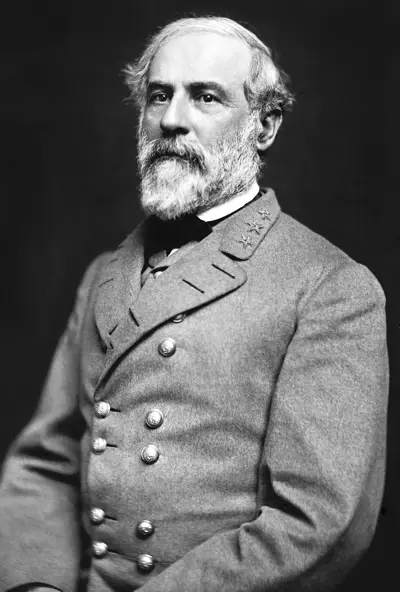
Robert Edward Lee was an American Confederate general best known as a commander of the Confederate States Army during the American Civil War. He led the Army of Northern Virginia from 1862 until its surrender in 1865 and earned a reputation as a skilled tactician.
