Charles Augustin de Coulomb Quotes
The sciences are monuments devoted to the public good; each citizen owes to them a tribute proportional to his talents.
Charles Augustin de Coulomb, 1736-1806, French physicist., Mémoires présentés par divers Savants à l'Académie des Sciences, 1778
Sourced by: Eigen's Political and Historical Quotations

This may be Kennedy’s most famous line. However he was not the first orator to express this idea however. See Khalil Gibran {601423}, Warren G. Harding {622594} and {629021}, St. John Broderick {595734}, and Oliver Wendell Holmes Jr. {603707} for earlier expressions of similar sentiments. Holmes seems to be the first to express the idea while the earliest seems similar phraseology seems to be the British Politician St. John Broderick in 1893 {595734}. Although, these earlier expressions existed, Theodore C. Sorensen, who assisted Kennedy with this speech and wrote the draft, had distilled it from earlier expressions and views of JFK and said that these were Kennedy’s words. At the time, he stated that was unaware of the Gibran, Harding, Broderick and Holmes sentiments. Gibran had not yet even been translated into English. However it is not clear whether Kennedy himself had inadvertently recollected the phrase from any of the other quotations. (The question was never put to him.) The St. John Broderick quotation is a possible source. Kennedy was quite familiar with British political history, and his father and been U. S. Ambassador to Great Britain. Regardless, the quotation was as great for the place and timing—his inaugural—as it was for the phraseology which might have originated elsewhere.

This quotation might have been an inspiration for the famous JFK quotation {589867}. See Khalil Gibran {601423}, Warren G. Harding {622594} and {629021}, and Oliver Wendell Holmes Jr. {603707} for similar sentiments. Holmes preceded Broderick by a few years, but Broderick came closest to the Kennedy phraseology.


See Charles James Fox, John Milton, Jeremy Bentham, George Mason, Grover Cleveland, Benjamin Disraeli and Woodrow Wilson for similar expressions of this idea.


“Public charities” were government services that were like those provided by private charities: relief, food, housing etc. ie “welfare”


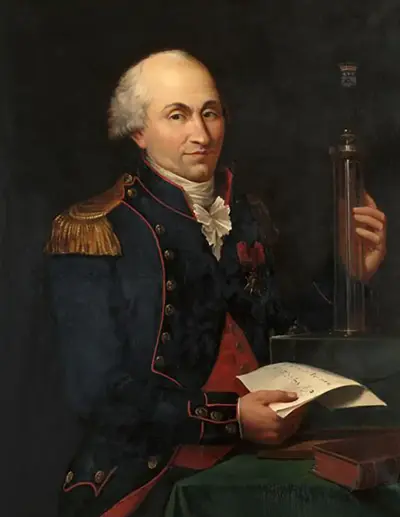
Charles-Augustin de Coulomb was a French military engineer and physicist. He is best known as the eponymous discoverer of what is now called Coulomb's law, the description of the electrostatic force of attraction and repulsion, though he also did important work on friction.
