C. V. Raman Quotes
In the history of science, we often find that the study of some natural phenomenon has been the starting point in the development of a new branch of knowledge.
Raman, C. V. "The Molecular Scattering of Light." Nobel Lectures, Physics 1922-1941, Elsevier Publishing Company, 1965, p. 267.

The English Language has been in use for over 1000 years. English and English Speaking scientists have been active througout that time. Yet at the time that Wulf pointed this out, the actual word "Scientist" had been in use for less than a century.


For many people, especially, bright and educated people, science has been an escape from unstable, political situations.


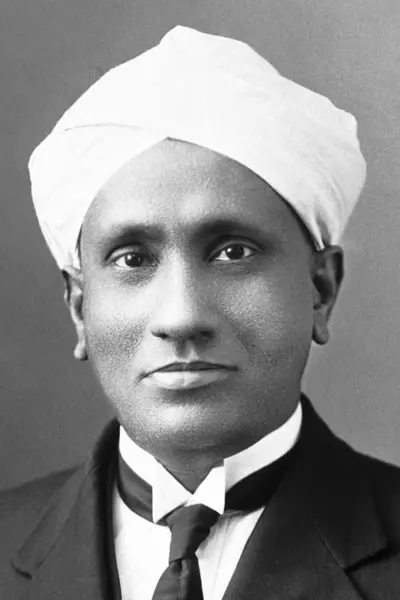
Sir Chandrasekhara Venkata Raman was an Indian physicist known mainly for his work in the field of light scattering. With his student K. S. Krishnan, he discovered that when light traverses a transparent material, some of the deflected light changes wavelength and amplitude. This phenomenon was a new type of scattering of light and was subsequently termed as the Raman effect (Raman scattering). Raman won the 1930 Nobel Prize in Physics and was the first Asian person to receive a Nobel Prize in any branch of science.
