Iran Quotes
The satellite dish is against the honorable Prophet [Mohammed]
Iran, Official view of satellite dishes to receive outside television signals, 1994, Quoted in Leslie Planner and Cherry Mosteshar, “Bringing a Beam of Delight to the Closed World of Iran,”
Sourced by: Eigen's Political and Historical Quotations

In September of 2005 a Danish Newspaper published some political cartoons showing the hypocrisy of some Muslims who use Islam to justify murder of innocents and terrorism. Months later, in January of 2006 many in the Middle East protested vehemently and Muslim riots broke out because the Prophet Muhammad's visage was depicted against Islamic tradition. Many Muslim nations started a boycott against Denmark. Many Muslim leaders claimed that insulting religion was an “abuse” of freedom of speech including those from nations which regularly publish material that is virulent against Christians and Jews. The Sheikh along with many other Muslims called for the death penalty for the cartoonist who was exercising his Danish right of freedom of expression.

Most political cartoons offend. The problem for the Yale Press was that if they did not print the cartoons, the violence and intimidation of the most extreme Muslims will have been rewarded as a strategy. If they printed, some people will be injured and killed in the likely rioting. If rioting did not occur spontaneously, it would be whipped up by the extremists. A Hobsen’s choice for publishers the world over that is exactly what the most extreme Muslims have planned.


In September of 2005 a Danish Newspaper published some political cartoons showing the hypocrisy of some Muslims who use Islam to justify murder of innocents and terrorism. Months later, in January of 2006 many in the Middle East protested vehemently and Muslim fatal riots broke out because the Prophet Muhammad's visage was depicted against Islamic tradition. Many Muslim nations started a boycott against Denmark. Many Muslim leaders claimed that insulting religion was an “abuse” of freedom of speech including those from nations which regularly publish material that is virulent against Christians and Jews.
In September of 2005 a Danish Newspaper published some political cartoons showing the hypocrisy of some Muslims who use Islam to justify murder of innocents and terrorism. Months later, in January of 2006 many in the Middle East protested vehemently and Muslim fatal riots broke out because the Prophet Muhammad's visage was depicted against Islamic tradition. Many Muslim nations started a boycott against Denmark. Many Muslim leaders claimed that insulting religion was an “abuse” of freedom of speech including those from nations which regularly publish material that is virulent against Christians and Jews.

Marlette was inundated by complaints from Muslims for his 2002 cartoon depiction of Muhammad driving a Ryder rental truck like the one used by convicted Oklahoma City terrorist bomber, Timothy McVeigh. The caption was, “What would Muhammad drive?” He was front-page news in Saudi Arabia and other Islamic nations. He received death threats. The Council on American-Islamic Relations and the Muslim World League both demanded an apology. Marlette refused. When he was killed in an automobile crash in July of 2007, many Muslims believed that this was the retribution of Allah.

In 2005 an Egyptian writer, Usama Anwar Ukasha, criticized one of the Prophet’s companion’s role for causing dissention and divisiveness in Islamic history. Some called for his legal punishment for slandering a holy figure (see {588714}) and a law case was brought to force him to divorce his wife—so that she would not be “contaminated by his heretical thoughts. Al-Bana argued for freedom of thought and speech on such subjects. His view was particularly important since he was the brother of Hassan Al-Bana, the founder of the Muslim Brotherhood, a powerful fundamentalist organization. Note that Al-Bana’s call for intellectual freedom does not go so far as to say that it should be legal to criticize The Prophet Muhammad and it illustrates how far even modern Islam has to go to meet reasonable standards of freedom of thought and speech.
In an orthodox Muslim nation, freedom of speech as a right is impossible.

Since Muslims try and convert others, one who changes religion and becomes a Muslim is exempt. The death penalty is reserved for Muslims who leave the religion.

In September of 2005 a Danish Newspaper published some political cartoons showing the hypocrisy of some Muslims who use Islam to justify murder of innocents and terrorism. Months later, in January of 2006 many in the Middle East protested vehemently and Muslim riots broke out because the Prophet Muhammad's visage was depicted against Islamic tradition. Many Muslim nations started a boycott against Denmark. Many Muslim leaders claimed that insulting religion was an “abuse” of freedom of speech including those from nations which regularly publish material that is virulent against Christians and Jews. In the United States a debate raged over whether or not news organizations should show the cartoons. Some did; most did not.


In September of 2005 a Danish Newspaper published some political cartoons showing the hypocrisy of some Muslims who use Islam to justify murder of innocents and terrorism. Months later, many in the Middle East protested vehemently and Muslim riots broke out because the Prophet Muhammad's visage was depicted against Islamic tradition. Many Muslim leaders claimed that insulting religion was an “abuse” of freedom of speech including those from nations which regularly publish material that is virulent against Christians and Jews.


Rushdie was commenting on the Danish Cartoons that had been published the year before depicting the Islamic Prophet Muhammad to the great distress of some fundamentalist Muslims some of whom orchestrated riots in many countries involving much property destruction and some loss of life. See {590918} as an example of the concern.

His call for the Pope’s assassination in a public meeting produced counter-protests all over England. Choudary had earlier threatened British Jews. See {615445}.
This quotation would be funny if it were not so serious. This major Islamic religious figure on television talks about the possible permissive killing of TV network owners for the crime of showing Tom and Jerry and Mickey Mouse Cartoons where anthropomorphic mice are sympathetic characters. He actually believes that Mickey Mouse is controlled by Satan.
There is irony in this act and statement. The film was censored because it was a defamation to Jesus Christ, who the Muslims recognize as a holy Prophet. See {620971} . However, ultra-fundamentalist Muslim clerics preach hate and desecration of Christianity, Judiasm, and Hinduism commonly. None are ever prosecuted in Pakistan. Books and pamphlets excoriating Christian, Jewish, Hindu and Bhai prophets are common place in Pakistan. Ironically, this banned film was called for by the Catholic Church.
This quotation was reported to Congress by Thomas Jefferson. Essentially, this religious justification is no different from that made by contemporary Islamic extremists. Particularly interesting is the last sentence. The Koran states that all Muslims who die defending Islam will go immediately to heaven regardless of their previous sins and transgressions. Under that justification, even criminal extortion and terrorism is justified by some Muslims whenever the victims are non-believers.

For a number of years Rushdie were in hiding and some of his publishing associates were killed or injured. Britain broke diplomatic relations with Iran over the Fatwa.

He was the first American that who was assassinated by the Central Intelligence Agency by means of a drone attack. He was a major recruiter for Al Qaeda and he preached to 3 of the 9-11 terrorists.

Physiologically a very young girl is often capable of getting pregnant, but physiologically is not able to bear children without high risk to both children. A similar risk pattern exists with women over the age of 40. While there are a number of Islamic countries that do sanction pedophilia within marriage, there is nothing inherent in Islamic theology that justifies this. Modern Islamic nations like Turkey and other Muslim majority nations do not allow marriage at such a young age. Also, it was not to long ago, in historical time, that Christian nations also sanctioned marriage to very young girls.
This verse has been one of the bases of Muslim theocratic states like Iran’s claim to legitimacy.
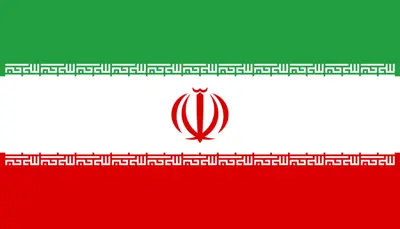
Iran, also called Persia (/ˈpɜːrʒə/) and officially known as the Islamic Republic of Iran (Persian: جمهوری اسلامی ایران Jomhuri-ye Eslāmi-ye Irān (listen)), is a country in Western Asia. With over 81 million inhabitants, Iran is the world's 18th most populous country. Comprising a land area of 1,648,195 km2 (636,372 sq mi), it is the second largest country in the Middle East and the 17th largest in the world. Iran is bordered to the northwest by Armenia and the Republic of Azerbaijan, to the north by the Caspian Sea, to the northeast by Turkmenistan, to the east by Afghanistan and Pakistan, to the south by the Persian Gulf and the Gulf of Oman, and to the west by Turkey and Iraq. The country's central location in Eurasia and Western Asia, and its proximity to the Strait of Hormuz, give it geostrategic importance. Tehran is the country's capital and largest city, as well as its leading economic and cultural center.
