William O. Douglas Quotes
The right to work, I had assumed, was the most precious liberty that man possesses. Man has indeed as much right to work as he has to live, to be free, to own property.
Douglas, William O. Dissenting opinion. Barsky v. Board of Regents of the University of the State of New York, 347 U.S. 442, Supreme Court of the US, 26 Apr. 1954, p. 472.


Internal population movement was tightly controlled in China for fear that the huge body of rural peasants would swamp the cities seeking economic opportunity. In 2000 the Chinese were debating the wisdom of this policy.


He had been a Congressman before assuming the Presidency. Civil rights was a major subject of debate after the Civil War. One major issue was that of citizenship itself. Many contended that Americans were citizens of a state and dependant on the state for the protection of civil rights. However, the extent to which the Federal government could and should be the guarantor of citizenship issues was in dispute. Today with the issue settled in favor of Federal preeminence, it is hard to realize that this was very unsettled at one point in history. Garfield was one of those leading the effort for more Federal involvement and control.

This statement summarized what had been a basic principle of American Law as derived from English law. See {587704}.

This quotation was reprinted and widely distributed by the CIO in its 1936 organizing drive of the Ford Motor Company


It was the common practice in France to allow citizens to work in various occupations only if they received Royal permission. Some obtained monopolies in certain trades for certain areas. This is an excellent case of a reform which completely reversed previous policies. The authority doing the reform takes credit for it ignoring that the abuses and evils that it corrected were operated and maintained by them also. This quotation was also used in arguing the Slaughterhouse Cases before the Supreme Court in 1873.


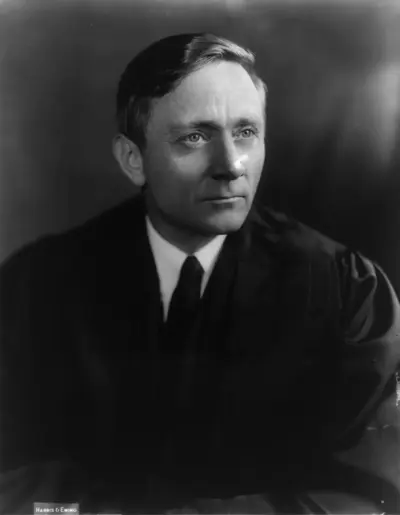
William Orville Douglas was an American jurist and politician who served as an associate justice of the Supreme Court of the United States. Nominated by President Franklin D. Roosevelt, Douglas was confirmed at the age of 40, one of the youngest justices appointed to the court. His term, lasting 36 years and 211 days (1939–75), is the longest in the history of the Supreme Court. In 1975, Time magazine called Douglas "the most doctrinaire and committed civil libertarian ever to sit on the court."
