Bernard Baruch Quotes
The unemployed have rights that are above charity. They have the right to work.
Bernard Baruch, 1870-1965, Businessman & Chairman, War Industries Board, U. S. Delegate to U.N. Atomic Energy Commission, Speech, November 1931
Sourced by: Eigen's Political and Historical Quotations

Internal population movement was tightly controlled in China for fear that the huge body of rural peasants would swamp the cities seeking economic opportunity. In 2000 the Chinese were debating the wisdom of this policy.


The existence of a groups of de facto “unemployable” people has been with our country since its inception. However over time, the cadre of unemployable people has changed as the simple jobs are lost to automation and computerized solutions and the jobs that are left require an extensive education and skills set. While the New Deal programs helped reduce the numbers of unemployable people, and WWII required such great production, by the 21st century, the “unemployable” population had grown substantially and proportionately from 1936.


Executed by the English for his part in the Easter Uprising. In the late 19th century the 12 hour work day was typical and it was 6 days a week. To reform labor hours it was not enough to argue the effect on the individual and the family. It had to be argued as a solution to the unemployment problem as well.

Well over a century ago, this prescient economist pointed out that in a very competitive economy, people would have to develop and have multiple skills to remain employable. The competition also produces technological obsolescence.


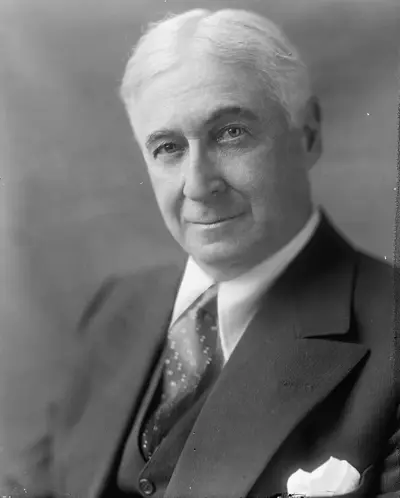
After amassing a fortune on the New York Stock Exchange, he impressed President Woodrow Wilson by managing the nation's economic mobilization in World War I as chairman of the War Industries Board. He advised Wilson during the Paris Peace Conference. He made another fortune in the postwar bull market, but foresaw the Wall Street crash and sold out well in advance. In World War II, he became a close advisor to President Roosevelt on the role of industry in war supply, and he was credited with greatly shortening the production time for tanks and aircraft. Later he helped to develop rehabilitation programs for injured servicemen. In 1946, he was the United States representative to the United Nations Atomic Energy Commission, though his Baruch Plan for international control of atomic energy was rejected by the Soviet Union.
