Thaddeus Stevens Quotes
The proposed 14th Amendment allows Congress to correct the unjust legislation of the States, so far that the law which operates upon one man shall operate equally upon all.
Thaddeus Stevens, 1792-1868, U. S. Congressman (Whig and Republican, PA), Titular Republican party leader, Quoted in Raoul Berger, Government by Judiciary: The Transformation of the Fourteenth Amendment
Sourced by: Eigen's Political and Historical Quotations

Southerners and some others wanted to discriminate and fought civil rights legislation. The excuse they gave for opposition was that the Federal Government was usurping the power of the states to determine what civil rights people of the state would have. Shellabarger made it clear that the civil rights bill would not require ANY rights to be given. It just required that if the states granted rights, they could not discriminate by race as to those rights. But the states were free to decide which rights all citizens of the state would have. See {623473} .
What was to become the 14th Amendment was being discussed. Several of the most radical Republicans drafted language that would allow Congress to make any law regarding life, liberty or property, so that they could be sure that the States would not make their laws in a discriminatory manner. However, Hotchkiss and the majority wanted to be sure the laws were not discriminatory but they didn’t want Congress to have the power to make any law regarding life, liberty and property for every state. The current version of the 14th Amendment just prohibited discrimination in laws, not empowering the Federal Government to override the state governments in most important areas.

This was the first named Civil Rights Act passed in the United States. It was passed over the veto of President Andrew Johnson, a Southerner, who tried to thwart Congress’s efforts at Reconstruction.


This ruling upheld a military draft for males only. The logic was that men and women were dissimilar persons.


In the 1930s African Americans who traveled were subject to countless humiliations whenever the sought hotels, rooming houses, restaurants and other accommodations. Gas stations would not allow them to use bathrooms and they were reduced to using open fields. Traveling and vacationing was, for Blacks, humiliating. Wikipedia: “Green reviewed hotels and restaurants that did business with African Americans during the time of Jim Crow laws and racial segregation in the United States. He printed 15,000 copies each year. In the 1930s, Green began his work by compiling data on stores in the New York area that accepted black travelers, and published his first guide in 1936. Similar guides had been published for Jewish travelers, who sometimes faced discrimination. Green's guide was so popular that he immediately began to expand its coverage the next year to other US destinations, adding hotel and restaurants as well.”
The 10th Amendment reserves powers to the states and limits the Federal Government’s powers. However, there are other clauses in the Constitution, like the Commerce Clause (Article I Section 8), which gives the Federal Government authority and control over Interstate Commerce, which in modern society permeates almost all activities of State government, The result is that the federal government / state government power division has been a political issue and not really a constitutional one. At the time Republicans advocated a literal 10th Amendment interpretation and the Democrats favored a stronger Federal Government with more authority and power as stated by the Commerce Clause. Roy had been trying to explain to his fellow Republican strategists that it is hard to attract Blacks to the remainder to the Republican Platform as long as they were insensitive to what the 10th Amendment meant to Blacks historically. The Southern states cited the 10th Amendment more than any other part of the constitution to justify their right to maintain slavery. It was the Federal Government that ended slavery. Under the rubric of the 10th Amendment the South managed to get rid of most of the racial civil rights Reconstruction reforms that were imposed by the Federal Government on the Southern States. And it was the 19th Amendment that was the authority for Segregation for 100 years. And the terrorism of the Klu Klux Klan and the lynching and terror imposed on Blacks by Southern states claiming the 10th Amendment right to do so. Finally, it was the Federal Government, overriding the 10th Amendment with the Commerce Clause and other parts of the Constitution that passed and enforced the Civil Rights Act, the Voting Rights Act, Desegregation and the end to Lynching and other Southern State-Sponsored terrorism. Blacks will not any time soon accede to having the 10th Amendment literal view of the role of government and if Republicans insist on that there would continue to be very few Black Republicans,


Incredible as it seems today, no Black person had ever dined in the White House as a guest of the President. African American servants were common. And Abraham Lincoln had received many Black visitors as had Presidents after him. But no president had ever had a Black person to dine as a social equal. The photo, reproduced here, illustrates the parity. But that was the worst thing a President could do so far as Tillman and his fellow racists were concerned. They had, since the end of the Civil war, used violence and terrorism to murder, maim and/or intimidate the Negro population to remain in an economic and socially inferior position. In Tillman’s state over these decades they had more lynchings than legal executions and there were plenty of them. Newspapers over the South riled up the whites and there was a wave of terror to be sure that the President’s importune action would not be taken as an endorsement of the Negro’s right to any equality or even dignity. This dinner essentially wedded all the Blacks to the Republican Party and all the Southern Whites to the Democratic Party. This would remain the political situation for over 60 years until the Democrats passed the LBJ Civil Rights Act in 1964 and the Republicans decided to solicit the Southern White racists who accepted the invitation and within a few years, there was a complete reversal of party loyalty of most Blacks and most Southern White Racists.

Professor Egerton documents how successful Reconstruction was in radically changing the positions of Blacks in the South. He points out that it was so effective that a hate-filled, racist group of Southern White terrorists, with murder, arson, torture and intimidation took over many of the governments of the South while President Andrew Johnson, who although he believed in the Union, was himself an inveterate racist and opponent of emancipation, would not use the force of the Federal Government to bring the terrorists to justice. (The KKK leaders were known in every state and county). They successfully overthrew Reconstruction and set the process back by 100 years.

He was trying to calm many Americans who were upset that a young Black man who was accused of a minor misdemeanor of selling loose cigarettes (not whole packs) was being arrested by 5 white New York City police officers who thought that he was not cooperating forced him to the ground with one using a “choke hold” that was against Police Department regulations. The video, taken by a citizen, showed the arrested man crying to the police several times that he could not breathe when the pressure was placed by the officer with the choke hold. He man was choked to death. The coroner declared the death a homicide. However, the Staten Island district attorney presented the case to the Grand Jury in such a way that the jury found no reason to indict any of the police officers for any crime. Staten Island is a borough of New York far smaller and more suburban than the rest of New York System and more than half of all the white New York City police officers lived in the only conservative borough of New York where they were a major political force in the election of the borough district attorney. The President told the public that the Justice Department would investigate the case to determine if the victim’s civil rights had been violated.
In the 1930s African Americans who traveled were subject to countless humiliations whenever the sought hotels, rooming houses, restaurants and other accommodations. Gas stations would not allow them to use bathrooms and they were reduced to using open fields. Traveling and vacationing was, for Blacks, humiliating. Wikipedia: “Green reviewed hotels and restaurants that did business with African Americans during the time of Jim Crow laws and racial segregation in the United States. He printed 15,000 copies each year. In the 1930s, Green began his work by compiling data on stores in the New York area that accepted black travelers, and published his first guide in 1936. Similar guides had been published for Jewish travelers, who sometimes faced discrimination. Green's guide was so popular that he immediately began to expand its coverage the next year to other US destinations, adding hotel and restaurants as well.”

This proposed Amendment would also have repealed the 14th and 4th Andmendments

The rich whites won the class war by splitting the poor and working class with race hatred and then coopting one half—the poor whites so that neither the poor whites or blacks obtained much and even into the 21st century the poor of the American South were the worst off of all the poor in America.

The power structure of England and the English administrators of South Africa were strong advocates of racial equality at the beginning of the 19th century. They insisted on equal administration of law. However the Boer white population could think of nothing more absurd. In a sense the Boers were much like the Southern Whites at the same time. The South African government however could not enforce its equality policies in the rural area – the majority of South Africa at the time. When democracy and self rule came to South Africa, the racially moderating force of the English was minimized and the majority of South Africans wanted a racially segregated society. Apartheid resulted.

For many years after the Civil War, in an effort to dignify the Southern rebellion, it was fashionable to ignore or skim over the institution of slavery in American history. Government, in particular regarded the issue as divisive even a century after the Emancipation Proclamation.

Following the lead of Arkansas, many southern schools were closed by order of the Governor when they received a court order to desegregate. Southern education was the poorest in the nation and the Southern students not able to go to school made the situation worse. Governor Almond changing his position realized that the cost of defying the Constitution and the courts was the ignorance of the students of the state, and became a major force persuading the state to integrate their schools. He is remembered for his leadership of desegregation and most people have forgotten that at the beginning of his term as governor he was as bad as most of the other Southern segregationist politicians.

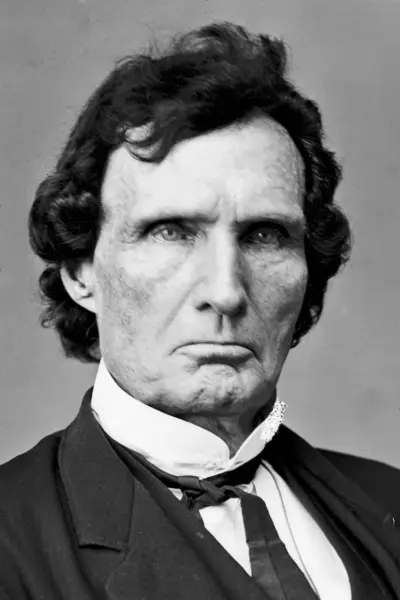
Thaddeus Stevens was a member of the United States House of Representatives from Pennsylvania. He was one of the leaders of the Radical Republican faction of the Republican Party during the 1860s. A fierce opponent of slavery and discrimination against African Americans, Stevens sought to secure their rights during Reconstruction, leading the opposition to U.S. President Andrew Johnson. As chairman of the House Ways and Means Committee during the American Civil War, he played a leading role, focusing his attention on defeating the Confederacy, financing the war with new taxes and borrowing, crushing the power of slave owners, ending slavery, and securing equal rights for the Freedmen.
