Oliver Perry Morton Quotes
This Constitutional amendment will forever withdraw the subject from politics, and will strike down that prejudice [racism] to which the Democratic party has appealed for years.
Oliver Perry Morton, 1823-1877, U. S. Senator (Republican, IN), Governor of Indiana, Argument for the passage of the Fourteenth Amendment
Sourced by: Eigen's Political and Historical Quotations


Southerners and some others wanted to discriminate and fought civil rights legislation. The excuse they gave for opposition was that the Federal Government was usurping the power of the states to determine what civil rights people of the state would have. Shellabarger made it clear that the civil rights bill would not require ANY rights to be given. It just required that if the states granted rights, they could not discriminate by race as to those rights. But the states were free to decide which rights all citizens of the state would have. See {623473} .

The upper socioeconomic classes are generally less rascist then the lower classes in the United States as well as England and South Africa. The counter argument given by the lower classes are that the upper classes have the money to insulate themselves from the negative aspects of desegregation and the lower class whites have to bear the brunt of desegregation. However, in South Africa, the English of all socioeconomic classes were far less enthusiastic about apartheid then were the Boers. The latter were farmers who wanted the land; the former were traders who could succeed even of the Blacks had their land and were given political rights.

What was to become the 14th Amendment was being discussed. Several of the most radical Republicans drafted language that would allow Congress to make any law regarding life, liberty or property, so that they could be sure that the States would not make their laws in a discriminatory manner. However, Hotchkiss and the majority wanted to be sure the laws were not discriminatory but they didn’t want Congress to have the power to make any law regarding life, liberty and property for every state. The current version of the 14th Amendment just prohibited discrimination in laws, not empowering the Federal Government to override the state governments in most important areas.


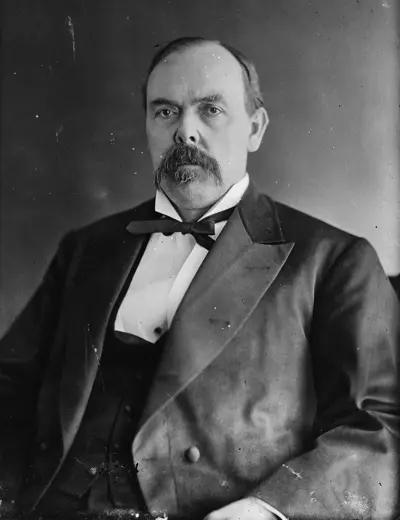
Oliver Hazard Perry Throck Morton, commonly known as Oliver P. Morton, was a U.S. Republican Party politician from Indiana. He served as the 14th Governor (the first native-born) of Indiana during the American Civil War, and was a stalwart ally of President Abraham Lincoln. During the war, Morton thwarted and neutralized the Democratic-controlled Indiana General Assembly. He exceeded his constitutional authority by calling out the militia without approval, and during the period of legislative suppression he privately financed the state government through unapproved federal and private loans. He was criticized for arresting and detaining political enemies and suspected southern sympathizers. As one of President Lincoln's "war governors", Morton made significant contributions to the war effort, more than any other man in the state, and earned the lifelong gratitude of former Union soldiers for his support.
