Hassan Al-Turabi Quotes
The Prophet himself used to visit women, not men, for counseling and advice. They could lead prayer. Even in his battles, they are there! In the election between Othman and Ali to determine who will be the successor to the Prophet, they voted
The Prophet of Islam was not as sexist and discriminatory against women as are many of his modern followers. The women voting to which Terabi referred took place over 1000 years before Christians and Jews allowed women to vote. Unfortunately, Islam went from a modern, open, intellectual, tolerant, innovative religion, to just the opposite.
Hassan Turabi, 1932- Sudan Islamic Leader, Lawrence Wright Interview with Hasan al-Turabi in Wright, The Looming Tower, 2006
Sourced by: Eigen's Political and Historical Quotations

She was also Australia’s First Woman Cabinet Minister.


She was instrumental in outlawing slavery and two years after this speech she and her daughters appeared in public without the traditional Burka or veils. The conservative fundamentalists were outraged and they deposed her husband and her modern influence ended.


Felton was the first female U. S. Senator although she only served for a day. She had been appointed by the governor upon the death of Senator Tom Watson in 1922 and served until the elected Walter F. George took office.


Turkey, the only Islamic nation where women have equal rights, made huge developmental and reform strides immediately after Ataturk reformed Turkish society and gave women the vote, freed them from veils and chadors, educated them and gave them equal employment rights. Turkey moved from an impoverished 3rd world nation to a modern industrialized democracy.

Persia had made the daughter of Chosroes its queen.

Her husband had been assassinated. It is not uncommon that after a political assassination, the widow of the slain male politician, carries on the political legacy. But otherwise there are few female politicians in the Third World in general and the Middle East in particular. Arab and other cultures so severely restrict a woman’s mobility within the society that death of a husband or father seems to be the only vehicle whereby a woman enters politics.


It would be over 30 years more before American women could vote for President. Lockwood never could.

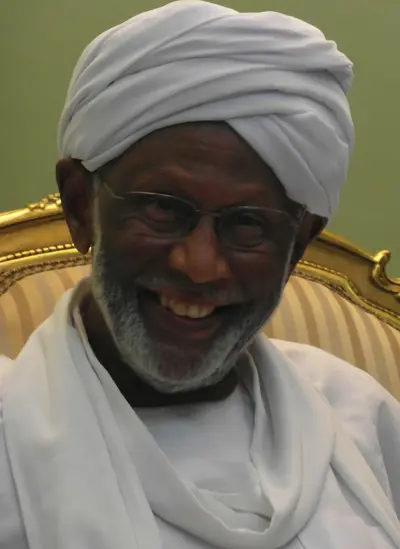
Hassan 'Abd Allah al Turabi was a Sudanese Islamist politician who was considered "the true architect" of 1989 coup that brought Omar Al-Bashir to power. He has been called "one of the most influential figures in modern Sudanese politics", and a "longtime hard-line ideological leader". He was instrumental in institutionalizing sharia (Islamic law) in the northern part of the country and was frequently imprisoned in Sudan, but these "periods of detention" were "interspersed with periods of high political office".
