Adam Cohen Quotes
The press should not get special privileges - if they drive recklessly or put people in danger, they should be subject to every reckless driving and endangerment law on the books - but they should also not be singled out for special punishment.
Cohen, Adam. "California's New Paparazzi Law: A Threat to the First Amendment." Time, 24 July 2012.


In modern times, there have been many incidents of members of the press not supporting the current war effort. Sometimes, it is the greed to get a story, and other times, it is to advocate an alternate strategy. Most often it is a belief that in democracy, only a knowledgeable public can govern the government. The administration or general cannot be relied upon to provide accurate information. Many think The Vietnam War started this problem, but it has been ongoing ever since the Revolution. In the War of 1812, with many Americans dying fighting, other Americans were critiquing the war infuriating the military and the President. Similarly, in all other wars including the Civil War. The relationship between Grant and the Press was as vitriolic as that of the Vietnam War. The war where there was the least conflict between the military and the press was WWII where press were given total access to the front lines without the controls that developed later in the Iraq War.


Note how the second paragraph nullifies the first of the government declares an emergency. This is a trick that is very common in constitutions.


Arguing against explicit guarantees of press freedom in the Constitution Hamilton felt that the freedom could be maintained by public opinion and the good will of government:
Usually Jefferson was the strongest voice for rights with no loopholes. However, he wanted to have a slander exception as this quote shows. However, the issue is what happens if a government official or an agency believed that it has been falsely slandered? If Jefferson’s proposal was accepted completely, the government and officials could sue someone who published negative information that they thought was false. Our supreme court has limited the exception to private parties who were NOT “public figures” unless the publisher knew the information was false and proceeded anyway for malicious reasons.
England and most other countries do not have such an exception and the press is very timid about criticizing the government or officials lest they make a mistake .
The word “printer” had a slightly different meaning then. In Jefferson’s time the printer was also the publisher, Benjamin Franklin was known as a printer but he not only published material but wrote much of it himself. This was typical. So Jefferson is concerned with the rights of the printer, the publisher and the writer.

He wrote this before he became a Supreme Court Justice.

Samuel Langhorne Clemens, 1835-1910. Twain was a much sought after public speaker in an era before TV and radio. Some speeches like this he delivered many times in many places.
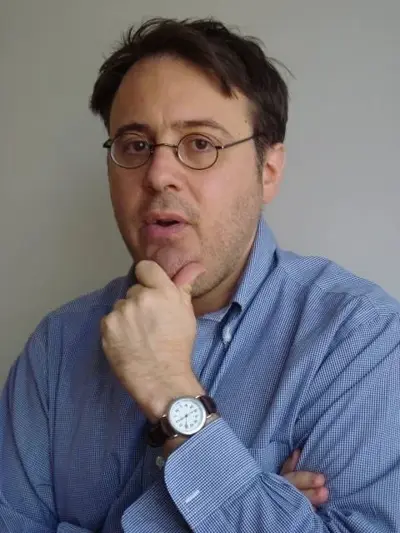
Adam Seth Cohen (born c. 1962) is an American journalist, author, lawyer, and former assistant editorial page editor of The New York Times. He also works in the administration of New York City Mayor Bill de Blasio.
