James Fenimore Cooper Quotes
It is a misfortune that necessity has induced men to accord greater license to this formidable engine, in order to obtain liberty, than can be borne with less important objects in view; for the press, like fire, is an excellent servant, but a terrible master.
Cooper, James Fenimore. The American Democrat. H. & E. Phinney, 1838.

The evils of the time were even worse than in modern times. Most newspapers, journals, and periodicals were in 1835 actually owned and operated by political parties or people totally identified with political parties. In modern times, there are publications and blogs which are controlled by political forces, but most are not.


Arguing against explicit guarantees of press freedom in the Constitution Hamilton felt that the freedom could be maintained by public opinion and the good will of government:


Note how the second paragraph nullifies the first of the government declares an emergency. This is a trick that is very common in constitutions.

Originally it was published in Boston under the name “A Columbian Patriot.” This was written before the Bill of Rights had been added. Criticism like this led to their addition by Congress in order to obtain ratification.


Two decades later Jefferson, after his Presidency, had developed a different attitude towards the press. See {585116}.

The statement was in protest to the Spanish arrest of a Syrian born journalist, Taysir Alluni, who had been accused of supporting Al-Quaeda cells in Spain by moving money to the cells. Alluni was well connected with Al-Quaeda as he had reported on them for some time and had personally interviewed Osama Bin Laden. Many believe that the cash was a cultural misinterpretation of the Muslim custom of sending cash as a wedding present which the Spanish authorities may have misinterpreted as financing of terrorism. Many believe that he is the victim of Anti-Islamic bias. While many legitimate news organizations are are troubled by this case, the Syrian protest is particularly ironic. In Syria there is not freedom of the press and any reporter can go to jail for offenses from insulting Islam to disparaging the Syrian government and its officials. There is no such thing as freedom of expression in Syria and there has not been since the Baathists gained control of the government.
In September of 2005 a Danish Newspaper published some political cartoons showing the hypocrisy of some Muslims who use Islam to justify murder of innocents and terrorism. Months later, in January of 2006 many in the Middle East protested vehemently and Muslim riots broke out because the Prophet Muhammad's visage was depicted against Islamic tradition. Many Muslim nations started a boycott against Denmark. Many Muslim leaders claimed that insulting religion was an “abuse” of freedom of speech including those from nations which regularly publish material that is virulent against Christians and Jews. Westerners came to the support of Denmark. The United States which usually supports freedom of the press made this veiled criticism of the Danish Newspaper.

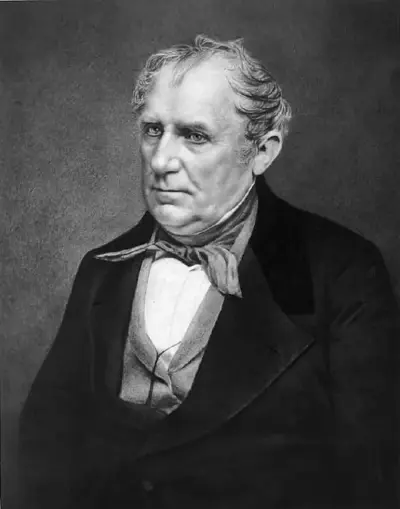
James Fenimore Cooper was an American writer of the first half of the 19th century. His historical romances depicting frontier and Native American life from the 17th to the 19th centuries created a unique form of American literature. He lived much of his boyhood and the last fifteen years of life in Cooperstown, New York, which was founded by his father William Cooper on property that he owned. Cooper became a member of the Episcopal Church shortly before his death and contributed generously to it. He attended Yale University for three years, where he was a member of the Linonian Society.
