William Blackstone Quotes
The liberty of the press is indeed essential to the nature of a free state, but this consists in laying no previous restraints upon publications, and not in freedom from censure for criminal matter when published.
William Blackstone, 1723-1780, British Jurist, Commentaries on the Laws of England, 1783
Sourced by: Eigen's Political and Historical Quotations


Two decades later Jefferson, after his Presidency, had developed a different attitude towards the press. See {585116}.

The evils of the time were even worse than in modern times. Most newspapers, journals, and periodicals were in 1835 actually owned and operated by political parties or people totally identified with political parties. In modern times, there are publications and blogs which are controlled by political forces, but most are not.

Arguing agaist libel and sedition prosecutions:


Originally it was published in Boston under the name “A Columbian Patriot.” This was written before the Bill of Rights had been added. Criticism like this led to their addition by Congress in order to obtain ratification.

Note how the second paragraph nullifies the first of the government declares an emergency. This is a trick that is very common in constitutions.

This quotation was used ten years later by Virginia which, in convention, passed a resolution objecting to the Alien & Sedition Acts. The drafter of the original resolution was James Madison.

This was a decade before the Constitutional Convention in Philadelphia. You can imagine the distress of Vermonters when the U. S. Constitution was written with no provision for absolute freedom of speech which they had had for a over a decade. They would not ratify the U, S, Constitution without the understanding that there would be a Bill of Rights added with the First Amendment.


This is one of the Supreme Court opinions that was written so broadly that it clearly covered the Internet Blogs, Social Media, and other forms.
The statement was in protest to the Spanish arrest of a Syrian born journalist, Taysir Alluni, who had been accused of supporting Al-Quaeda cells in Spain by moving money to the cells. Alluni was well connected with Al-Quaeda as he had reported on them for some time and had personally interviewed Osama Bin Laden. Many believe that the cash was a cultural misinterpretation of the Muslim custom of sending cash as a wedding present which the Spanish authorities may have misinterpreted as financing of terrorism. Many believe that he is the victim of Anti-Islamic bias. While many legitimate news organizations are are troubled by this case, the Syrian protest is particularly ironic. In Syria there is not freedom of the press and any reporter can go to jail for offenses from insulting Islam to disparaging the Syrian government and its officials. There is no such thing as freedom of expression in Syria and there has not been since the Baathists gained control of the government.


Arguing against explicit guarantees of press freedom in the Constitution Hamilton felt that the freedom could be maintained by public opinion and the good will of government:

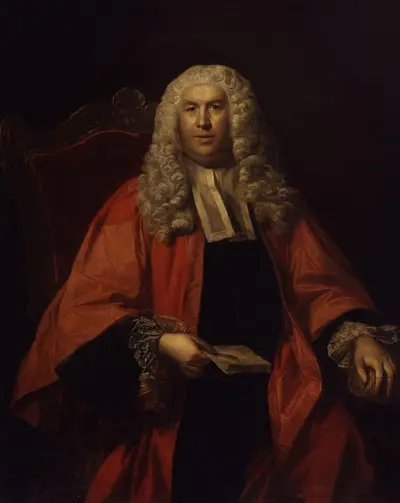
Sir William Blackstone SL KC was an English jurist, judge and Tory politician of the eighteenth century. He is most noted for writing the Commentaries on the Laws of England. Born into a middle-class family in London, Blackstone was educated at Charterhouse School before matriculating at Pembroke College, Oxford, in 1738. After switching to and completing a Bachelor of Civil Law degree, he was made a fellow of All Souls, Oxford, on 2 November 1743, admitted to Middle Temple, and called to the Bar there in 1746. Following a slow start to his career as a barrister, Blackstone became heavily involved in university administration, becoming accountant, treasurer and bursar on 28 November 1746 and Senior Bursar in 1750. Blackstone is considered responsible for completing the Codrington Library and Warton Building, and simplifying the complex accounting system used by the college. On 3 July 1753 he formally gave up his practice as a barrister and instead embarked on a series of lectures on English law, the first of their kind. These were massively successful, earning him a total of £453 (£71,000 in 2021 terms), and led to the publication of An Analysis of the Laws of England in 1756, which repeatedly sold out and was used to preface his later works.
