Mark Twain Quotes
It is a free press...There are laws to protect the freedom of the press's speech, but none that are worth anything to protect the people from the press.
Samuel Langhorne Clemens, 1835-1910. Twain was a much sought after public speaker in an era before TV and radio. Some speeches like this he delivered many times in many places.
Mark Twain, Writer, Founder, Anti-Imperialist League, Speech “License of the Press”
Sourced by: Eigen's Political and Historical Quotations


Note how the second paragraph nullifies the first of the government declares an emergency. This is a trick that is very common in constitutions.


Arguing against explicit guarantees of press freedom in the Constitution Hamilton felt that the freedom could be maintained by public opinion and the good will of government:


In September of 2005 a Danish Newspaper published some political cartoons showing the hypocrisy of some Muslims who use Islam to justify murder of innocents and terrorism. Months later, in January of 2006 many in the Middle East protested vehemently and Muslim riots broke out because the Prophet Muhammad's visage was depicted against Islamic tradition. Many Muslim nations started a boycott against Denmark. Many Muslim leaders claimed that insulting religion was an “abuse” of freedom of speech including those from nations which regularly publish material that is virulent against Christians and Jews. Westerners came to the support of Denmark. The United States which usually supports freedom of the press made this veiled criticism of the Danish Newspaper.


The evils of the time were even worse than in modern times. Most newspapers, journals, and periodicals were in 1835 actually owned and operated by political parties or people totally identified with political parties. In modern times, there are publications and blogs which are controlled by political forces, but most are not.


For a corroberating quote see Quotation 644762


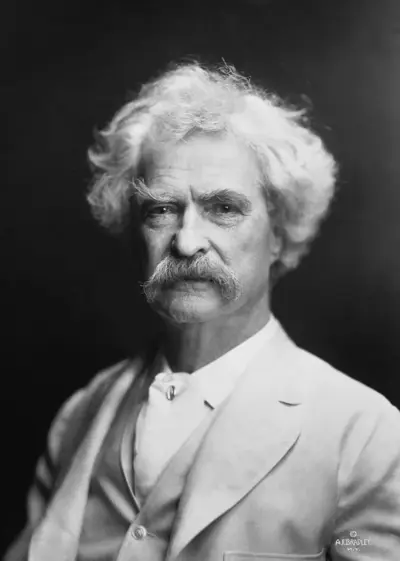
Samuel Langhorne Clemens, known by his pen name Mark Twain, was an American writer, humorist, entrepreneur, publisher, and lecturer. He was lauded as the "greatest humorist the United States has produced," and William Faulkner called him "the father of American literature". His novels include The Adventures of Tom Sawyer (1876) and its sequel, the Adventures of Huckleberry Finn (1884), the latter often called "The Great American Novel".
